
In a world increasingly defined by movement-of people, ideas, and cultures-the very notion of borders stands at a crossroads. No longer mere lines drawn on maps or barriers to be policed, borders have become dynamic spaces of interaction, negotiation, and transformation. “Borders in Motion: Rethinking Global Migration Beyond Crisis and Control” invites us to look beyond the familiar narratives of emergency and enforcement. It challenges us to imagine migration not as a problem to be managed, but as a complex, ongoing process that reshapes societies and redefines belonging. In this shifting landscape, the questions we ask-and the stories we tell-can open new pathways toward understanding the fluid realities of human movement in the 21st century.
Rethinking Borders as Dynamic Gateways Rather Than Static Barriers
- Borders as Liminal Interfaces: Traditional views often cast borders as rigid, impermeable lines-fortresses designed solely to exclude or control population flow. However, this perspective neglects their inherent permeability and evolving nature. Borders act as dynamic gateways, mediating not just the movement of people but also ideas, capital, and culture. Recognizing borders as liminal spaces underscores their role in shaping layered identities and enabling cultural hybridity, rather than simply enforcing exclusion. This challenges simplistic binaries of “open” versus “closed,” urging policymakers to approach border governance through a lens that balances security with fluid connectivity.
- Trade-off Between Sovereign Control and Adaptive Openness: Embracing borders as dynamic systems requires trade-offs: enhanced adaptability often comes at the cost of traditional notions of sovereignty and territorial integrity. Rather than viewing state control and migrant mobility as mutually exclusive, a nuanced framework can view border management as a spectrum where varying degrees of permeability and control coexist. This means investing in technological innovation, cooperative cross-border infrastructure, and flexible legal frameworks that accommodate both national security and humanitarian imperatives. Such an approach should also distinguish between different types of mobility-economic migration, refuge seeking, tourism-tailoring response strategies that are context-specific instead of blanket restrictions.
| Aspect | Static Barrier Model | Dynamic Gateway Model |
|---|---|---|
| Conceptual Frame | Rigid boundary, fixed limits | Flexible interface, continuous negotiation |
| Policy Focus | Exclusivity and exclusion | Selective inclusion and adaptive response |
| Societal Impact | Polarization, securitization | Integration, coexistence of multiple identities |
Unpacking the Cost of Crisis Narratives in Shaping Migration Policies
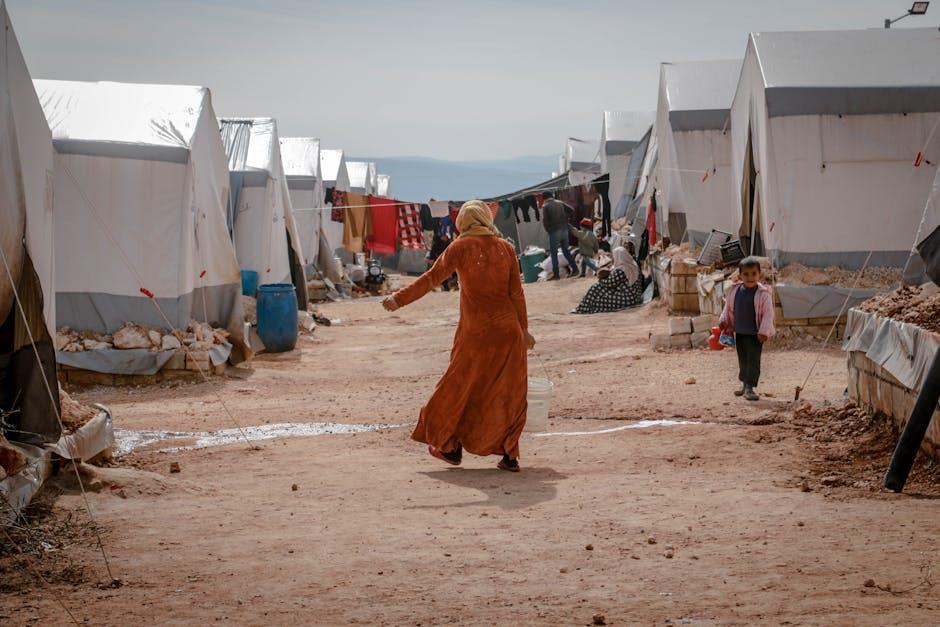
- Inflating the “crisis” narrative often serves political expediency rather than pragmatic policy-making: The persistent portrayal of migration as an imminent threat distorts public perception, leading to policies driven by fear rather than evidence. This framing narrows the focus to immediate containment and border fortification, disregarding the nuanced socioeconomic and geopolitical factors underlying migration flows. By emphasizing urgency and emergency, governments-and by extension, media-justify draconian measures that prioritize securitization at the expense of human rights and long-term integration strategies. The trade-off here is stark: reactive crisis management fixes symptoms instead of addressing root causes such as inequality, climate change, and international labor dynamics, perpetuating cyclical instability rather than sustainable solutions.
- Reassessing cost implications requires distinguishing between short-term visibility and long-term societal impact: Policymakers often equate high expenditure on border control with effective governance, yet this conflation ignores the hidden costs of reinforcing crisis narratives, including eroded social cohesion, increased clandestine migration, and overstretched asylum systems. A nuanced approach acknowledges that investing in robust legal pathways, community-based integration programs, and international cooperation can mitigate these costs far more efficiently. The following table crystallizes this dynamic:
| Cost Type | Crisis-Driven Response | Proactive, Rights-Based Approach |
|---|---|---|
| Financial | High immediate spending on enforcement and surveillance | Long-term investment in integration and international frameworks |
| Social | Polarization, xenophobia, and humanitarian backlash | Enhanced community resilience and social inclusion |
| Political | Short-term political gains overshadowing long-term strategy | Sustainable policymaking informed by evidence and ethics |
- Ultimately, dismantling the crisis narrative demands candid acknowledgment of these trade-offs and courage to shift from reactionary control to visionary governance that respects migration as a structural and dynamic global reality rather than a temporal emergency.
Beyond Control and Containment Exploring Smarter Approaches to Mobility
- Rethinking Mobility as Dynamic Systems Rather Than Static Threats: Conventional migration policies have predominantly framed movement through a lens of control-focusing on strict containment, border fortification, and punitive deterrence. This binary approach not only oversimplifies complex human realities but fuels cycles of insecurity and inefficiency. Instead, smarter approaches recognize migration as a fluid, multi-dimensional process shaped by economic, environmental, and social factors that transcend geopolitical boundaries. Policies should pivot from reactive gatekeeping to proactive management, emphasizing adaptability and collaboration across jurisdictions, sectors, and communities. This transition demands acknowledging migration’s dual nature: it is both a challenge requiring regulation and an opportunity to harness human mobility for shared prosperity.
- Trade-offs Between Security, Flexibility, and Human Dignity: Developing nuanced migration frameworks involves balancing legitimate security concerns with the imperatives of humane treatment and economic pragmatism. Overemphasis on securitization erodes trust and often drives migration into irregular channels, undermining both governance and social cohesion. Conversely, overly permissive regimes may strain public resources and fuel political backlash. The optimal path lies in integrated systems that combine rigorous yet transparent border technologies, streamlined legal pathways, and robust integration programs. For example, leveraging data analytics to predict migratory flows can enhance resource allocation without sacrificing rights. Policies must also prioritize inclusive dialogue with migrants themselves, ensuring that mobility frameworks reflect diverse needs rather than one-size-fits-all assumptions.
| Approach | Strengths | Limitations |
|---|---|---|
| Hard Border Control | Strong deterrent effect; clear enforcement | Pushes migration underground; costly; human rights risks |
| Flexible Migration Corridors | Facilitates labor mobility; encourages legal pathways | Requires complex coordination; vulnerability to exploitation |
| Technology-Enabled Smart Borders | Efficient processing; data-driven decision making | Privacy concerns; unequal access to technology |
Confronting the Complex Realities Behind Migration and National Security
National security and migration are too often framed as unequivocal opposites-security necessitates closed borders, and migration inevitably threatens stability. This binary oversimplifies a far more intricate reality. Forced migration driven by conflict, environmental degradation, or economic disparity is not a security threat waiting to explode, but a symptom of global systemic failures requiring adaptive governance rather than securitization. In fact, conflating migration with immediate security risks often leads to policy responses that exacerbate vulnerabilities, such as protracted displacement and illicit trafficking networks. The challenge lies in recognizing that migration flows can reflect deeper transnational dynamics, including geopolitical shifts and economic interdependencies, where security must evolve from static defense to dynamic resilience. Policymakers must therefore abandon blunt securitarian approaches in favor of strategies that integrate humanitarian foresight, international cooperation, and local community engagement, all while carefully assessing the real and perceived risks with empirical clarity rather than reactive politics.
Distinguishing between security dimensions reveals critical trade-offs:
- Hard security: Traditional border enforcement and military measures may reduce unlawful entries but incur high social, economic, and diplomatic costs that destabilize regional relations.
- Human security: Prioritizing the safety and rights of migrants aligns with long-term stability but often lacks immediate political capital and requires robust institutions.
- Cyber and informational security: New arenas where misinformation on migration manipulates public perceptions, necessitating transparent media diagnostics and policy communications.
Nuanced policy recommendations include: developing cross-sectoral frameworks that align migration management with conflict prevention; investing in data-driven impact assessments over emotion-driven rhetoric; and fostering multilateral platforms emphasizing shared responsibility rather than unilateral containment. Ultimately, confronting migration’s complex realities demands a paradigm shift-not to weaken borders, but to render them smarter, configured to serve as interfaces of regulated mobility and security assurance rather than impermeable fortresses that deepen human insecurity.
Navigating Trade Offs Between Sovereignty and Human Rights in Border Management
- Sovereignty as a Fluid Concept: The traditional framing pits sovereignty against human rights as a zero-sum game-either states control borders unfettered, or they cede authority to international norms. This binary oversimplifies sovereignty, which is better understood as a dynamic negotiation shaped by global interdependence. States retain legitimate security concerns but must recognize that absolute control is neither feasible nor ethically justifiable in an interconnected world. Sovereignty exercised without regard for human dignity risks eroding legitimacy and fomenting deeper instability.
- Human Rights as Enablers of Sustainable Sovereignty: Rather than constraining sovereignty, integrating robust human rights protections can enhance border governance effectiveness. For example, transparent asylum procedures and humanitarian safeguards do not weaken a state’s control; they build trust, reduce abuses that fuel conflict, and preempt costly crises. Yet, this requires fine-tuned mechanisms that balance immediate security imperatives with long-term social cohesion-an approach demanding both political will and institutional innovation.
| Trade-Off Dimension | Sovereignty-First Approach | Human Rights-Inclusive Approach |
|---|---|---|
| Control | Maximized immediate border enforcement and expulsion powers | Strategic discretion exercised with due process constraints |
| Legitimacy | Potential erosion due to perceived rights abuses | Strengthened through compliance with international law |
| Resilience | Risk of persistent conflict and cycles of illegality | Improved social cohesion and negotiated stability |
Nuanced Recommendations: Policymakers must abandon the myth of a fixed trade-off and instead adopt adaptive governance that reconciles state interests with international norms. This includes investing in multi-level cooperation frameworks that empower border communities, deploying technology that respects privacy and dignity, and embedding accountability mechanisms transparent enough to build trust without compromising operational security. The crux lies in redefining sovereignty beyond mere territorial control towards stewardship of human mobility that affirms rights while responsibly managing flows.
In Conclusion
As the tides of migration continue to reshape our world, the rigid lines once defining borders blur into pathways of possibility. Moving beyond the familiar narratives of crisis and control invites us to envision a landscape where movement is not merely managed but understood – a dynamic flow reflecting humanity’s shared search for opportunity, safety, and belonging. In rethinking borders in motion, we are called to embrace complexity over simplicity, connection over separation, and hope over fear. The story of migration is not just about crossing boundaries; it is about redefining them, challenging us to imagine a future where borders serve as bridges rather than barriers.




