
In a world increasingly defined by movement-of people, ideas, and cultures-the rigid lines of traditional borders often feel like relics of a bygone era. Yet, despite decades of policies aimed at managing immigration through fixed boundaries and strict controls, lasting solutions remain elusive. The persistent challenges of integration, human rights, and economic disparity suggest that conventional approaches may be falling short. This article invites you to rethink borders not just as physical barriers, but as complex social constructs-and to explore why the familiar strategies of the past struggle to address the fluid realities of migration today.
Unseen Pitfalls in Conventional Immigration Policies and Their Real Costs
- Overemphasis on enforcement over integration: Conventional immigration policies predominantly concentrate on border control and deportation, often sidelining the nuanced needs of integration and social cohesion. This rigid focus not only fails to address underlying migratory drivers such as economic disparity and political instability, but it also inflates costs without yielding proportional returns in public safety or economic stability. The assumption that stricter enforcement alone deters irregular migration ignores the adaptability of migratory networks and may, paradoxically, increase undocumented populations by pushing migrants into longer, riskier stays or repeated crossings.
- Economic trade-offs rarely acknowledged: Traditional immigration approaches frequently ignore the dynamic economic roles immigrants fulfill, reducing policy debates to zero-sum tales of “jobs lost” to natives versus immigrants. Yet, a more integrative perspective reveals a nuanced matrix where immigrants simultaneously create demand, fill labor shortages, and innovate. Sharp cuts in immigration can lead to unintended consequences such as labor market rigidities and a demographic imbalance accelerating aging populations. Policymakers must weigh enforcement budgets against the potential fiscal benefits gained from expanded, legalized labor participation-often a more sustainable long-term investment.
| Common Policy Focus | Unseen Pitfall | Real Cost | Nuanced Recommendation |
|---|---|---|---|
| Heightened Border Security | Displacement of migration routes and increased human trafficking | Billions in enforcement; humanitarian crises | Invest in targeted diplomacy and regional development |
| Deportation-Centric Laws | Family separation; community destabilization | Social service strain; long-term economic loss | Prioritize case-by-case humanitarian review and reintegration programs |
| Restrictive Legal Pathways | Expansion of undocumented workforce | Underground economies; tax base erosion | Expand flexible visa categories with labor market alignment |
The Myth of Border Control as a Cure-All for Migration Challenges
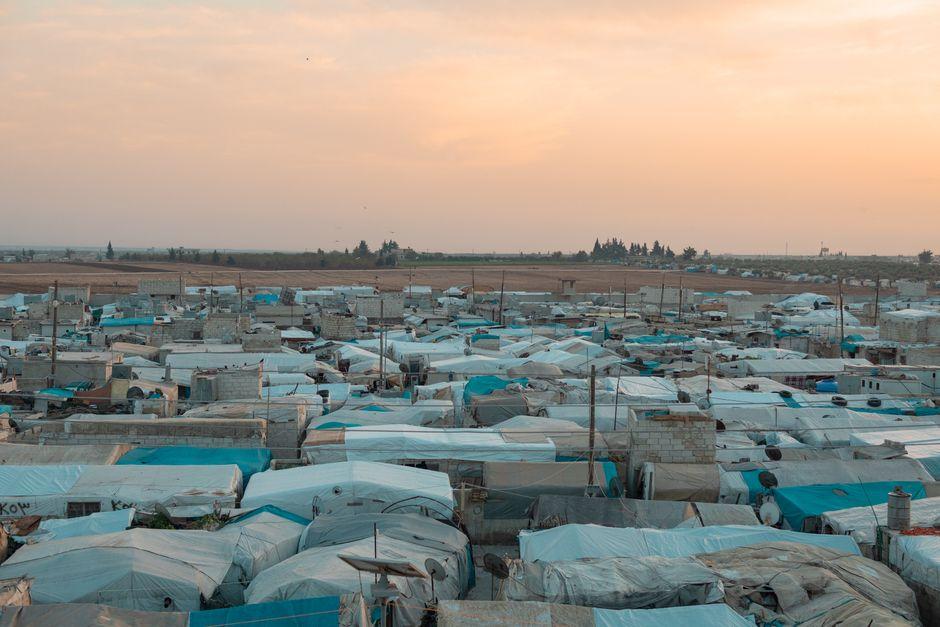
- Border control as a catch-all solution fundamentally misdiagnoses the complexities of migration. While physical barriers and increased patrols may curb certain unauthorized crossings, they fail to address the socio-economic and geopolitical drivers compelling people to move in the first place. This oversight results in a perpetually reactive posture-emphasizing enforcement over engagement, containment over comprehension. Countries that invest heavily in border fortification often see a shift rather than a reduction in migration flows, with routes becoming longer, more dangerous, and more expensive. This indicates a trade-off between immediate containment and long-term humanitarian and strategic costs.
- Moreover, the assumption that stricter controls inherently enhance national security overlooks nuanced realities. Borders serve as sites of both protection and permeability; rigid control can fracture legal avenues for migration, inadvertently fueling illicit trafficking networks. The economic implications reveal a paradox: while controls aim to preserve jobs and social services for citizens, they often complicate labor market needs by restricting the flow of essential workers in sectors that depend on migration. A more effective approach requires differentiating between types of migration-refugees, asylum seekers, labor migrants-and tailoring responses that integrate regulation with responsive legal frameworks and international cooperation, rather than defaulting to blunt border militarization.
Beyond Barriers and Enforcement Exploring Smarter Alternatives
- Rethinking physical barriers: Walls and fences often act as symbolic gestures rather than effective deterrents. Their presence can exacerbate geopolitical tensions and inadvertently push migratory flows toward more perilous, less-monitored routes, increasing human costs without reducing overall migration volumes. Instead of focusing on physical fortifications, a more nuanced approach would prioritize smart surveillance technologies integrated with data analytics to pre-empt unauthorized crossings, paired with legal pathways that address labor market demands and humanitarian considerations.
- Reevaluating enforcement-centric policies: Heavy-handed enforcement frequently triggers a “balloon effect,” where intensified border control in one area simply shifts irregular migration elsewhere. Moreover, excessive enforcement may erode community trust and limit cooperation from immigrant communities essential for effective policymaking and public safety. A balanced strategy necessitates investment in cross-border collaboration, robust visa programs tailored to economic realities, and community engagement models that recognize immigrants as critical stakeholders rather than security threats.
| Approach | Strengths | Trade-offs |
|---|---|---|
| Physical Barriers | Visual deterrent, politically popular | Costly, displaces migration patterns, limited effectiveness |
| Technological Surveillance | Proactive detection, cost-efficient in long-term | Privacy concerns, requires skilled management |
| Legal Immigration Pathways | Addresses root causes, facilitates integration | Political resistance, complex administration |
Trade-Offs and Tensions Between Security and Human Mobility
- Security imperatives often overshadow the complexity of human mobility. Policies targeting border security prioritize deterrence and control, frequently reducing diverse migratory flows to simplistic threats. This binary framing – safety versus openness – masks the nuanced reality that many migrants are fleeing violence, climate disruption, or economic desperation, factors that traditional security paradigms inadequately address. The tension here is real: intensified enforcement might secure borders temporarily but simultaneously fuels irregular migration and undermines the legal avenues migrants depend on, paradoxically escalating insecurity both for states and individuals. Rather than a zero-sum approach, a more pragmatic understanding acknowledges that rigorous security measures and humane migration pathways must coexist as part of an integrated strategy.
- Trade-offs between sovereignty and transnational human rights obligations reveal fundamental governance challenges. Countries instinctively guard the sanctity of their borders as an expression of sovereignty. However, rigid border practices often conflict with international human rights standards designed to protect displaced populations. This tension creates a governance paradox: prioritizing sovereignty risks sanctions against inhumane treatment, while unrestricted mobility can be politically unpalatable domestically. To navigate this, policymakers should embrace hybrid frameworks that balance risk management with flexible humanitarian responses, such as enhanced biometric systems combined with community-based refugee integration programs. Explicitly recognizing these trade-offs refocuses the debate from one of competing absolutes to one of calibrated policies that consider both state security and the imperatives of human dignity.
| Dimension | Traditional Approach | Rethought Perspective |
|---|---|---|
| Security Framing | Border as fortress; migrants as threats | Border as managed flow; migrants as rights-bearers and risk factors |
| Human Mobility | Controlled, limited visa channels | Dynamic, adaptive legal pathways aligned with societal needs |
| Policy Trade-off | Sovereignty prioritized over rights | Balanced sovereignty respecting human rights |
Navigating Complex Realities When Rethinking Immigration Frameworks
- Immigration frameworks cannot be disentangled from the socio-economic and geopolitical undercurrents that shape migration flows. Simplistic policy solutions-such as rigid border enforcement or blanket amnesties-often fail because they treat symptoms rather than systemic causes. For example, focusing exclusively on legal status adjustments without considering labor market demands or global inequality risks producing a revolving door of undocumented migration. Policymakers must distinguish between immediate border management needs and the long-term structural reforms required to address the root drivers of displacement, including global trade imbalances, climate instability, and labor exploitation.
- Trade-offs in immigration reform often hinge on the balance between sovereignty concerns and human mobility rights. While national security remains a valid priority, overemphasis on exclusionary measures ignores the economic and cultural benefits of well-managed immigration. A nuanced approach recognizes that border policies should be dynamic, regionally differentiated, and coupled with robust integration frameworks. Rather than static limits, adopting adaptable visa categories reflecting evolving labor market realities-and complementing these with decentralized decision-making to localize immigration impacts-can offer more durable and equitable solutions.
| Aspect | Traditional Approach | Rethought Framework |
|---|---|---|
| Border Security | Heavily fortified, often militarized | Strategic, intelligence-driven, coupled with cross-border cooperation |
| Legal Status | Binary (legal vs. illegal) | Flexible, tiered statuses linked to labor demands and community integration |
| Policy Focus | Enforcement and deterrence | Systemic solutions addressing root causes and economic integration |
The Conclusion
As we stand at the crossroads of global migration, it becomes clear that the borders we draw on maps cannot contain the complexities of human movement and aspiration. Traditional immigration solutions, grounded in rigid frameworks and short-term fixes, often fall short because they overlook the deeper social, economic, and humanitarian currents shaping migration today. To foster lasting change, we must rethink not just policies but the very narratives that define belonging and exclusion. Only by embracing nuanced, compassionate, and forward-thinking approaches can we hope to transform borders from barriers into bridges-opening pathways that reflect the shared humanity crossing them.




