
In an era where identity is both deeply personal and profoundly global, the allure of second citizenship beckons more than just passport holders-it calls to explorers of opportunity, security, and belonging beyond the lines on a map. Yet, this journey is far from a simple transaction or a straightforward choice. “Beyond Borders: Navigating the Complex Journey and Unexpected Realities of Second Citizenship” delves into the multifaceted paths that individuals embark upon when seeking a new national identity. From legal labyrinths and cultural intersections to unforeseen challenges and privileges, this exploration reveals that second citizenship is not merely about crossing borders, but about redefining the very notion of home in a world without frontiers.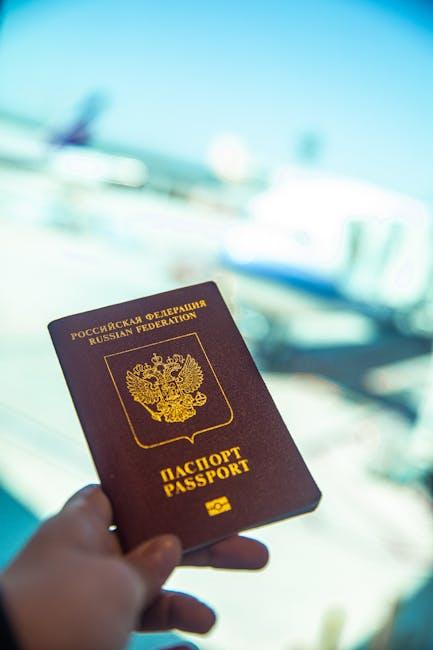
Charting the Emotional Terrain of Leaving One Identity Behind
When Amira decided to leave behind her South African citizenship for a European passport, she didn’t anticipate the quiet tug of identity that followed. It wasn’t just paperwork or an extra stamp in her passport-it was the subtle unease of relinquishing a lifetime of cultural nuances, childhood memories, and a sense of belonging that no official document could quantify. For many, the process of acquiring a second citizenship brings an intense moment of reflection: What parts of myself am I choosing to keep, and which am I ready to leave behind? This internal negotiation often plays out in seemingly mundane moments-declining a familiar local dish because it’s harder to find, avoiding political discussions that once felt central to personal identity, or feeling a sudden disconnect when celebrating national holidays abroad.
Consider the case of Javier, who took on Canadian citizenship after years in Toronto but realized that his Mexican roots remained a vital part of his daily existence. He faced moments where the distinction between legal identity and emotional belonging grew blurry. Would renouncing his original citizenship mean losing eligibility for family healthcare coverage or voting rights? These practical considerations clashed with personal ones, creating a complex emotional terrain to navigate. Such experiences underline key lessons for those charting similar paths:
- Expect contradictions: The legal simplicity of a citizenship swap rarely mirrors the emotional intricacies involved.
- Honor both identities: Accept that maintaining cultural ties while embracing new citizenship can coexist, rather than compete.
- Prepare for gradual shifts: Identity evolution is often subtle, revealed in everyday habits and connections rather than dramatic changes.
| Expectation | Real Experience |
|---|---|
| Instant sense of belonging | Lingering sense of cultural disconnect |
| Legal clarity and rights | Complex practical and emotional implications |
| Seamless transition | Gradual, sometimes conflicted adjustment |

When Aspirations Meet Bureaucracy: Unseen Hurdles in Gaining Second Citizenship
Maria’s journey toward obtaining a second citizenship began with hope and ambition. She envisioned a seamless process-submit documents, wait a few months, and receive a new passport that would open doors to global opportunities. However, the reality was far from this expectation. Bureaucracy introduced layers of complexity she hadn’t anticipated. At one point, after months of silence, a routine background check returned inconclusive, triggering an additional round of paperwork. This delay extended her timeline by nearly six months, and what should have been a straightforward renewal of her peaceful residency application turned into an emotional roller coaster. Maria learned firsthand that behind every application form lies a maze of administrative scrutiny, rigid documentation requirements, and unpredictable government procedures.
Many applicants, like Maria and her friend David, who sought citizenship through investment programs, find themselves at crossroads where aspirations clash with bureaucratic rigidity. While David assumed that his financial commitment alone would guarantee a quick process, he faced unexpected demands for further proof of funds, residency compliance, and even personal interviews. These moments force critical decisions:
- Wait and comply: Accept delays and invest time in understanding complex regulatory language.
- Seek expertise: Hire specialized consultants or lawyers but at added expenses.
- Reassess plans: Consider alternative citizenship pathways or entirely different countries.
| Expectation | Reality | Lesson Learned |
|---|---|---|
| Quick approval post-submission | Multiple unexpected document requests and procedural delays | Patience and meticulous preparation are vital |
| Financial investment ensures guaranteed citizenship | Verification processes require proof beyond money | Compliance with all legal nuances is mandatory |
| One-size-fits-all process | Individual cases vary greatly depending on background and jurisdiction | Tailored strategies improve success chances |
In navigating these unseen hurdles, aspiring dual citizens quickly realize that the process is less about ticking boxes and more about engaging with a living, breathing system-one that demands adaptability, informed decisions, and realistic expectations above all else.
Crossroads of Belonging Where Legal Status Meets Personal Reality
When Maria acquired her second citizenship, she envisioned seamless international travel and a sense of belonging that transcended her country of birth. However, the reality was far more nuanced. Although legally recognized as a citizen, Maria often encountered moments where her personal identity clashed with bureaucratic expectations. For instance, at the local bank, she was treated as a foreigner, required to produce documents not typically demanded of native citizens, highlighting the gap between legal status and lived experience. This crossroad-where official papers say one thing, but social perceptions say another-illustrates a common challenge for dual citizens navigating cultural integration versus administrative recognition.
Consider also Ahmed’s dilemma: holding two passports, he anticipated freedom from visa restrictions, yet faced emotional questions from family and friends about his ‘true’ homeland. His decision to maintain ties with both countries underscored a broader lesson-citizenship is often less about legal privilege than about the everyday choices that define belonging. The contrast between expectation and reality emerges clearly in such cases:
| Expectation | Reality | Lesson |
|---|---|---|
| Automatic social acceptance | Lingering perceptions of “otherness” | Belonging develops through relationships, not just citizenship |
| Freedom of unrestricted mobility | Unexpected administrative barriers persist | Legal status reduces but doesn’t erase obstacles |
- Legal recognition provides a framework but doesn’t guarantee cultural or emotional acceptance.
- Dual citizens often face complex identity questions that require navigating both internal values and external realities.
- Personal experiences frequently reveal that citizenship is an evolving journey rather than a fixed destination.
Stories from New Roots: How Second Citizenship Shapes Family and Culture
When Maria and Ahmed decided to pursue second citizenship in Portugal, their vision was clear: a safer future and better educational opportunities for their children. However, the experience unfolded into a multifaceted journey far beyond paperwork and legalities. Their daughter, who once resisted the idea of leaving her home country, gradually embraced a bicultural identity enriched by weekend language classes and festival celebrations blending traditions from both nations. This evolution wasn’t seamless; it involved moments of tension as the family navigated differing social norms and expectations. The family discovered that second citizenship often prompts a deeper conversation about belonging – it is less about abandoning roots and more about planting new ones that intertwine with existing ones, reshaping family dynamics and cultural narratives in unexpected ways.
Contrast this with the experience of Jin, who sought citizenship in Canada primarily for business advantages. Initially, Jin underestimated the cultural adjustments required for her teenagers, who found adapting to Canadian norms both challenging and isolating. The family’s story highlights that, despite advantages like travel freedom or economic security, the emotional and social facets of second citizenship can be complex and require ongoing attention. Lessons from these families emphasize the importance of open dialogue about identity within the household and proactive community integration strategies.
- Maria & Ahmed: Embraced dual heritage through language and culture education, fostering a hybrid identity.
- Jin’s Family: Learned to balance business motives with adolescent well-being, realizing citizenship involves social integration.
| Aspect | Expectation | Reality |
|---|---|---|
| Family Adaptation | Smooth transition for children | Initial cultural resistance and identity questioning |
| Cultural Identity | Preserving original identity solely | Blending cultures, forming new hybrid identities |
| Social Integration | Business advantages only (for Jin) | Need for emotional adjustment and community connection |
Unexpected Doors and Detours in the Pursuit of Dual Nationality
Maria’s journey to obtain dual nationality began with excitement and clear goals-she envisioned smoother international travel and better job prospects across Europe. However, after submitting her application through ancestry channels, she encountered an unexpected door: a backlog of paperwork that stretched processing times far beyond her original estimate. Months turned into over a year of waiting, during which the political landscape shifted and new requirements were introduced. This detour meant not just a delay but also additional documentation proving continuous lineage and identity confirmation that Maria hadn’t initially prepared for. Her lesson here? When pursuing dual nationality, be prepared for procedural shifts and the need for flexibility. What looked like a straightforward inheritance of citizenship rarely stays that way once government offices get involved.
In contrast, consider Amir, who sought citizenship through naturalization after relocating for work. He expected a linear process: live, work, apply, and receive. But the reality presented a roadblock at the language and cultural proficiency requirement. Despite living in the country for three years, Amir faced challenges passing the mandatory language exam, which was more nuanced than anticipated. The decision moment came when he realized that simply residing there wasn’t enough-he had to deeply engage with the culture and local life to satisfy the criteria. These unexpected hurdles illustrate the tension between expectation and outcome, emphasizing how perseverance and adaptive learning strategies play crucial roles. Key insights include:
- Understand specific eligibility nuances: Each path to dual nationality, be it ancestry, naturalization, or marriage, carries its unique and sometimes changing requirements.
- Prepare for administrative delays: Processing times vary widely and can extend unpredictably due to external factors like political changes or global events.
- Embrace cultural integration: For many naturalization routes, adapting to local society isn’t just beneficial-it’s mandatory.
| Common Detours | Impact | Practical Response |
|---|---|---|
| Changing Legal Requirements | Application revisions, delays | Frequent status checks, legal consultation |
| Language & Cultural Tests | Additional preparation time needed | Enroll in courses, community engagement |
| Extended Processing Times | Uncertainty, potential expiration of documents | Gather all documents regularly, renew as required |
Wrapping Up
As the journey toward second citizenship unfolds, it becomes clear that crossing borders is more than a legal process-it is an intricate dance with identity, opportunity, and unforeseen challenges. Beyond the paperwork and passports lies a landscape shaped by personal ambition, global politics, and shifting definitions of belonging. Navigating this complex terrain requires more than strategy; it calls for a deep understanding of the realities that second citizenship brings, both promising and perplexing. In embracing these complexities, individuals chart new paths that transcend geography, redefining what it truly means to call somewhere home.




