
In an era defined by shifting landscapes-both physical and political-the concept of borders transcends mere lines on a map. It morphs into a living tapestry of human movement, identity, and aspiration. Yet, much of the discourse surrounding migration remains tethered to narratives of crisis, danger, and division. “Borders in Flux: Rethinking Global Migration Beyond Crisis Narratives” invites readers to step beyond these familiar frames and explore migration as a complex, integral force shaping our interconnected world. This article delves into how migration challenges static notions of borders, urging us to reconsider the stories we tell about movement, belonging, and the ever-evolving geography of humanity.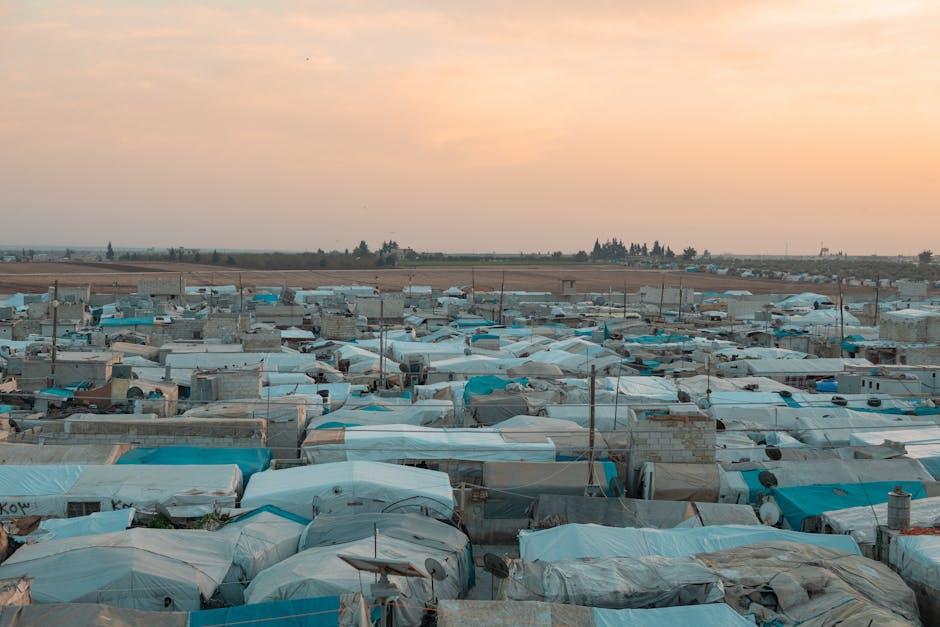
Challenging the Crisis Lens on Migration: Unpacking Overlooked Complexities
- Beyond the “crisis” narrative: a distortion of permanence-framing migration as a sudden emergency overlooks the enduring, structural forces driving human mobility. Economic disparities, climate change, and geopolitical shifts are neither temporary shocks nor isolated incidents; they are systemic dynamics demanding adaptable, long-term governance rather than reactive containment. The crisis lens simplifies migration to a problem needing rapid resolution, which often leads to securitization policies that prioritize border control over human rights and integration. This approach risks ignoring migrants as agents of change, contributing to both origin and destination communities in complex, mutually beneficial ways. Recognizing migration as an ongoing, dynamic process allows policymakers to shift from exclusionary panic to strategic engagement, which can foster social cohesion amid change.
- Trade-offs in policy paradigms: security, sovereignty, and dignity-policymakers are caught at the intersection of competing imperatives. Emphasizing national sovereignty and strict border enforcement often comes at the expense of migrant dignity and global cooperation. Conversely, liberalizing migration can provoke domestic backlash or perceived threats to social stability. Nuanced strategies that reject the zero-sum framing are imperative. For example:
| Policy Focus | Potential Gain | Trade-off | Balanced Recommendation |
|---|---|---|---|
| Fortified Borders | Short-term control and perceived security | Humanitarian neglect, strained diplomacy | Integrate smart technology with human rights safeguards |
| Open Migration Policies | Economic dynamism, cultural enrichment | Social tension, infrastructure strain | Phased integration programs with community investment |
| Regional Cooperation | Shared responsibility, conflict mitigation | Sovereignty concerns, implementation gaps | Transparent, binding agreements with local input |
Ultimately, moving beyond the crisis lens means embracing complexity without surrendering clarity-acknowledging that migration intersects with economics, identity, geopolitics, and legality in ways requiring flexible, humane, and forward-thinking policies. It demands a paradigm not of fear but of coexistence, where borders are not merely lines of exclusion but sites of negotiation, innovation, and shared futures.

The Invisible Costs of Simplified Border Narratives
- Oversimplification breeds policy myopia. When border narratives reduce migration to a simple binary of legal versus illegal or crisis versus stability, they obscure the complex socio-economic forces at play. Policies crafted within such narrow lenses often fail to address the root causes of migration, instead focusing on superficial containment measures that exacerbate vulnerabilities. This approach generates invisible costs: strained diplomatic relations, increased human rights violations, and lost economic opportunities that could have been leveraged through integrative strategies.
- The human toll often remains invisible. Simplistic narratives sideline the lived experiences of migrants, turning diverse journeys into monolithic tales of threat or victimhood. This erosion of nuance undermines public empathy and stifles constructive debate on reform. More critically, it shifts attention and resources away from the multifaceted support systems migrants need-healthcare, legal aid, and social inclusion-rendering policies not only ineffective but also ethically questionable.
| Narrative Simplification | Consequence | Recommended Nuance |
|---|---|---|
| Migration as Security Threat | Militarized borders, civil liberties erosion | Frame migration within economic and human rights frameworks |
| Crisis-Only Reporting | Policy paralysis except during peaks | Sustain ongoing dialogue on structural migration trends |
| Legal vs Illegal Dichotomy | Exclusionary policies, underground economies | Recognize ambiguous legal statuses and offer tailored pathways |
Beyond Emergency Measures The Case for Long-Term Strategic Migration Policies
- Emergency responses to migration, while necessary in moments of acute crisis, inherently prioritize short-term containment and humanitarian relief over sustainable integration and economic optimization. This reactive mode amplifies volatility, encourages policy patchworks, and tends to marginalize migrants’ long-term contributions to host societies.
- Shifting toward strategic, long-term migration frameworks demands clear-eyed recognition of migration as a structural phenomenon linked to demographic shifts, labor market demands, and geopolitical dynamics rather than a mere crisis variable. Such policies require nuanced risk-benefit analyses balancing border integrity, human rights, economic vitality, and social cohesion-dimensions too often pitted against one another in zero-sum debates.
| Policy Focus | Short-Term Emergency | Long-Term Strategy |
|---|---|---|
| Primary Goal | Containment and rapid relief | Integration and mutual benefit |
| Temporal Horizon | Months to 2 years | Decades, adaptable over time |
| Typical Tools | Border closures, temporary camps | Visa reform, labor market alignment, social infrastructure |
| Potential Trade-offs | Humanitarian strain; social exclusion | Political resistance; complex implementation |
Far from being a mere idealistic aspiration, embedding migration policies within a strategic, long-term perspective involves a conscious trade-off: accepting upfront complexity and political risk in exchange for durable social stability and economic dynamism. Policymakers must recalibrate narratives away from securitization and scapegoating toward inclusive dialogue, evidence-driven labor integration, and infrastructure investments that anticipate evolving migratory patterns-not just react to them. The challenge is to dismantle the faulty dichotomy that casts migrants solely as threats or victims, and instead recognize them as agents capable of reshaping the social contract in globally interconnected societies.
Moreover, strategic migration policies should incorporate adaptive mechanisms capable of responding to unpredictable factors-climate change, technological disruptions, global health crises-that exacerbate migratory flows. This calls for innovative governance instruments such as cross-border labor agreements, multi-stakeholder coordination platforms, and scalable integration models that transcend the limits of national sovereignty without undermining it. Ultimately, reframing migration as a managed continuum rather than episodic emergency unlocks pathways to harness mobility as a source of resilience rather than disruption, requiring policymakers to move beyond entrenched, crisis-driven mentalities towards foresight and flexibility.
Weighing Sovereignty and Solidarity Lessons from Shifting Borders
- Sovereignty and solidarity are often cast as opposing forces in migration debates, yet the real challenge lies in reconciling their coexistence rather than choosing one over the other. Traditional state-centric sovereignty emphasizes impermeable borders and unilateral control, but this rigid stance falters amid transnational movements that defy neat territorial constraints. Conversely, unbridled solidarity risks diluting state capacity to manage migration effectively, risking political backlash and social fragmentation. Rather than binary opposition, a more productive framework recognizes sovereignty as a shared responsibility, where states collectively uphold border integrity while enabling humane, cooperative migration policies that reflect interconnected realities.
- Effective border governance requires a sober trade-off analysis that moves beyond crisis-driven rhetoric. Prioritizing security above all can produce exclusionary policies that generate irregular migration flows and humanitarian crises, undermining long-term stability. Conversely, overstating solidarity without institutional robustness may invite unsustainable migration pressures and fuel nationalist retrenchment. The recommendation is a calibrated, adaptive approach: states should embed flexible mechanisms that allow temporary, legally regulated cross-border mobility aligned with labor markets and demographic needs, supported by multilateral frameworks ensuring reciprocal enforcement and burden-sharing.
| Dimension | Overemphasizing Sovereignty | Overemphasizing Solidarity | Balanced Approach |
|---|---|---|---|
| Policy Focus | Strict border enforcement, unilateral migration controls | Open-door policies, minimal restrictions | Legal channels coupled with collaborative border management |
| Impacts | Increased irregular migration, humanitarian risks | Potential social strain, political polarization | Managed mobility, reduced crises, shared responsibilities |
| Sustainability | Limited | Fragile without enforcement mechanisms | Higher, when multilateral cooperation is leveraged |
Redefining Global Mobility Balancing Human Needs and National Interests
- Human mobility is often framed solely through the lens of national security and economic cost-benefit analyses, yet such a reductionist view neglects the intrinsic dignity and agency of migrants as individuals with complex needs and aspirations. National interests understandably focus on sovereignty, social cohesion, and economic stability; however, policies that prioritize restrictive measures at the expense of humane treatment ultimately undermine the very social fabric they seek to protect. It is critical to move beyond the binary of “open” versus “closed” borders by recognizing that mobility governance must integrate nuanced understandings of human vulnerability, cultural identity, and long-term integration potential. For instance, targeted pathways that balance the urgency of labor market demands with robust social support systems can mitigate the often-cited risks of displacement without sacrificing human rights or social equity.
- Practically, reconciling these dual imperatives requires a strategic recalibration of migration policy frameworks:
Dimension National Interest Priority Human-Centered Approach Trade-Offs Security & Sovereignty Strict border control, surveillance Risk assessment nuanced by individual context, community engagement Relaxed controls may increase complexity but foster trust and reduce clandestine flows Economic Needs Selective labor migration for market gaps Inclusive policies allowing skill development and family reunification Short-term costs versus long-term societal benefits and innovation Social Cohesion Cultural homogeneity emphasis Support for multiculturalism and integration programs Balancing national identity preservation with diversity enrichment
Recommendations:
– Develop multifaceted mobility frameworks that incorporate transparent metrics beyond mere economic impact, such as psychosocial well-being and civic participation.
– Invest in adaptive social infrastructure, recognizing that mobility trends evolve with globalization, environmental change, and technological disruption.
– Challenge the default crisis narrative by responsibly framing migration as a dynamic contributor to national vitality rather than a threat-this shift alone can transform public discourse and policy efficacy.
In Conclusion
As the lines that define nations continue to shift and blur, so too must our understanding of migration evolve beyond the confines of crisis narratives. Borders are not just barriers or battlegrounds-they are living, breathing spaces where cultures, stories, and futures intersect. To rethink migration is to embrace complexity, to acknowledge movement as an intrinsic part of the human experience rather than a disruption. In doing so, we open the door to policies and perspectives that are not anchored in fear, but guided by empathy, innovation, and a shared sense of possibility. The flux of borders reminds us that change is constant-and within that change lies the chance to reimagine a world where migration is not merely managed, but embraced.




