
In an era where global connectivity often feels just a flight away, the allure of dual nationality shines brightly—promising freedom of movement, broadened opportunities, and a foot in two worlds. Yet beneath this glossy surface lies a complex web of legal, political, and personal challenges that many overlook. “Dual Nationality Unmasked: Why Holding Two Passports Is a Strategic Liability, Not a Freedom” delves beyond the romanticized notion of borderless identity to reveal the subtle pitfalls and unintended consequences that can turn this seemingly advantageous status into a precarious balancing act. This exploration invites readers to reconsider the true cost of dual allegiance in a world ever more defined by sovereignty and scrutiny.
The Illusion of Choice in Dual Citizenship Revealing the Costs Behind the Convenience
At first glance, dual citizenship appears as the ultimate passport to global mobility and legal pluralism—a coveted freedom to traverse borders, capitalize on economic opportunities, and leverage political rights in two nations. However, this perceived “freedom” is often an illusion crafted by oversimplified narratives. The reality beneath the surface reveals a complex web of reciprocal obligations and costly trade-offs. Far from mere convenience, holding dual citizenship can entangle individuals in conflicting legal frameworks, tax regimes, and loyalty expectations that demand a strategic evaluation rather than blind embrace. The choice is less about freedom and more about managing risks in sovereignty overlaps, where the cost is not just bureaucratic but profoundly existential: which nation’s laws take precedence in crisis? Which cultural identity must yield when interests diverge? These are uncomfortable questions that challenge the superficial notion that two passports equal twice the power.
Making an informed decision about dual nationality requires moving beyond glossy promises of borderless existence to a clear-eyed appraisal of tangible burdens. For example, citizens with dual status may face:
- Double taxation in countries with aggressive worldwide tax policies, threatening financial stability.
- Mandatory military service or legal penalties from one country even while residing in another.
- Conflicting political obligations where voting rights come with expectations of allegiance that aren’t always compatible.
- Complicated estate and inheritance laws that fragment assets across jurisdictions, escalating legal costs and delays.
These trade-offs underscore that dual citizenship is not a linear addition to one’s rights portfolio but a multidimensional balancing act demanding nuanced navigation. Instead of seeking dual status as a catch-all freedom, individuals must assess the strategic fit of each nationality within their unique life context. This means questioning if the additional legal complexity serves a clear purpose or if it merely introduces an underestimated liability. Opting for a single nationality aligned with long-term personal and professional objectives frequently emerges as a sharper, more resilient strategy in an increasingly volatile global landscape.
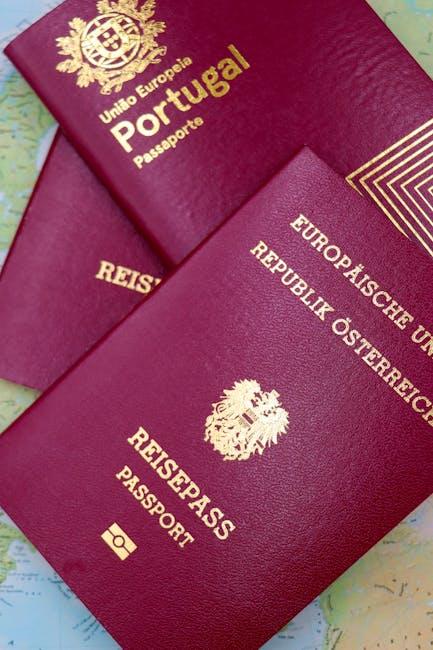
Beyond Borders The Complex Legal Entanglements of Multiple Passports
Holding multiple passports undeniably extends your global mobility, but it also entangles you in a web of often contradictory jurisdictions, tax obligations, and legal frameworks. The naive notion of dual nationality as a straightforward asset fails to account for the intricate legal labyrinth it creates. For instance, dual nationals may inadvertently trigger double taxation or fall foul of stringent military service requirements in one country, while enjoying protections in another. This complexity is not just bureaucratic red tape—it can lead to real consequences like frozen assets, travel bans, or worse, conflicting demands from governments during geopolitical crises. The supposed freedom often morphs into a legal quagmire requiring professional expertise and continuous vigilance, transforming a strategic advantage into a persistent legal liability.
In weighing the costs and benefits of multiple passports, consider the following nuanced trade-offs:
- Legal obligations: Dual nationality can impose simultaneous allegiance demands, complicating conflict-of-interest situations—especially for business owners or diplomats.
- Compliance burden: Navigating tax filings, mandatory disclosures, and residency laws across borders eats time and resources, diminishing practical freedom.
- Security risks: Multiple citizenships might flag heightened scrutiny with immigration or intelligence agencies, paradoxically reducing personal security.
| Benefit | Challenge | Recommended Approach |
|---|---|---|
| Expanded global mobility | Inconsistent legal expectations | Engage specialized counsel to audit compliance risks before acquiring another citizenship |
| Access to social benefits | Complicated social service eligibility and taxation | Maintain clear residency and tax records; consider financial planning strategies tailored to multi-jurisdictional status |
| Enhanced cultural identity | Potential loyalty conflicts under legislative pressures | Prioritize transparent communication with relevant authorities and avoid politically sensitive engagements |
Why Dual Nationality Can Undermine Your Financial Security and Privacy
At first glance, holding dual nationality might appear as a financial boon—doubling opportunities, broadening investment horizons, and enabling easier cross-border mobility. Yet, the reality is far more complex and often detrimental to both financial security and privacy. With dual citizenship, you effectively invite multiple tax jurisdictions into your life, each with its own set of reporting requirements and potential liabilities. This can lead to inadvertent non-compliance, triggering audits, penalties, or worse. For example, U.S. citizens living abroad must file taxes regardless of residence, and if their second nationality carries similar rules, the risk of double taxation or onerous disclosure obligations increases exponentially. This isn’t just an administrative hassle—it’s a direct assault on your wealth’s integrity.
Beyond taxation, the privacy trade-offs from dual nationality are frequently underestimated. Governments increasingly share financial and personal data to combat tax evasion and illicit finance, meaning dual nationals become prime targets for scrutiny. Your financial footprint spreads across borders, breaking down traditional barriers that once protected sensitive information. Consider the following critical vulnerabilities:
- Expanded Financial Transparency: Exchange of information agreements can expose foreign-held assets, accounts, and transactions to multiple governments.
- Increased Compliance Costs: Navigating overlapping financial regulations requires specialized legal and accounting support, steadily eroding net gains.
- Limited Anonymity: The notion that multiple passports afford “freedom” to obscure financial activity is largely illusory in today’s interconnected regulatory environment.
In essence, dual nationality often converts what was once a competitive financial advantage into a liability requiring constant vigilance. Smart individuals assess not just the passport’s value but the total cost of compliance and privacy erosion, adopting dual status only when meticulously planned and matched with professional strategies tailored to mitigate these multi-jurisdictional pitfalls.
Balancing Loyalties The Unseen Diplomatic and Emotional Strains of Holding Two Flags
Holding dual nationality is often romanticized as a seamless fusion of identities and allegiances, but the reality is fraught with diplomatic and emotional complexity. The expectation that one can fully harmonize two national loyalties glosses over the underlying geopolitical tensions that may pit these identities against each other. For instance, during international disputes, a dual citizen might be involuntarily caught in crossfires where neither passport provides clear protection. This isn’t about disloyalty; it’s a structural ambiguity—an inherent conflict of interest magnified by ever-shifting foreign policies. The emotional cost of navigating these divided loyalties can be profound, triggering identity dissonance and social alienation in both countries. Instead of celebrating “having the best of both worlds,” it is vital to recognize the psychological toll and diplomatic minefields that dual nationality silently imposes.
Managing dual allegiance demands acute awareness and strategic judgment, not blind allegiance or simplistic pride. Here, the trade-offs become stark:
- Legal Obligation vs Emotional Connection: A passport is a legal instrument filled with obligations, from taxes to military service, which may clash with personal attachments or practical realities.
- Political Identity vs Social Belonging: Maintaining deep political or civic involvement in two countries can lead to fragmented social networks and potential suspicion from both sides.
- Security vs Vulnerability: While two passports can increase options, they also magnify one’s exposure to surveillance, legal scrutiny, or restrictions unique to dual nationals.
| Aspect | Common Assumption | Nuanced Reality |
|---|---|---|
| Identity | Dual nationality enriches multicultural identity effortlessly. | Often generates internal conflict and external misunderstanding. |
| Legal Rights | Two passports double protection. | Legal obligations and restrictions can intensify and overlap. |
| Freedom of Movement | Dual nationality guarantees unrestricted global mobility. | Can result in tangled surveillance or travel bans in diplomatic crises. |
For those considering dual nationality, the recommendation is not to view it as a binary freedom-versus-constraint issue but as a nuanced negotiation requiring thoughtful self-reflection and legal foresight. Navigating dual loyalty successfully demands a candid evaluation of potential conflicts, readiness for emotional complexity, and an informed approach to legal duties that often go unmentioned in celebratory narratives. Only through this lens can the true diplomatic and emotional strains be acknowledged and mitigated.
Single Passport Strategies Navigating Global Mobility Without Multiplying Risks
Despite the prevailing narrative that dual nationality is the ultimate passport to unfettered global mobility, the truth is far more complex—and often less advantageous—than commonly portrayed. A well-orchestrated single passport strategy, when executed with precision, can minimize legal liabilities and geopolitical entanglements, providing a streamlined and risk-conscious approach to international movement. This tactic is not about forsaking flexibility but about optimizing quality over quantity in travel documentation. It recognizes that multiple passports do not necessarily multiply freedoms; rather, they multiply administrative burdens, inconsistent obligations, and sometimes even legal contradictions—such as conflicting tax residencies and military service requirements.
Smart single passport holders distinguish themselves by strategically selecting a country of citizenship that offers the right combination of:
- Substantial visa-free access to target regions
- Robust consular support without excessive obligations
- Stable political and economic environment
- Clear and manageable tax treaty networks
Rather than piling on passports in a scattergun approach, this curated method demands a clear-eyed trade-off: fewer nationalities—but each chosen for precision fit to individual mobility, financial planning, and risk tolerance. Below is a comparison illustrating these trade-offs:
| Aspect | Dual Passport Strategy | Selective Single Passport Strategy |
|---|---|---|
| Compliance Burden | High—multiple tax regimes, legal duties | Low—focused on one set of regulations |
| Travel Freedom | Broad but potentially conflicting | Targeted and consistent |
| Consular Support | Varies—may conflict | Reliable and focused |
| Risk Exposure | Amplified—double political/legal exposures | Mitigated through clarity and predictability |
In essence, by rejecting the default glorification of dual nationality, individuals can embrace a more nuanced, strategic posture that prioritizes clarity, consistency, and control over the illusory promise of “more is better.” This not only lightens compliance demands but also enables a confident, friction-minimized global existence.
Key Takeaways
In the end, dual nationality is neither a simple badge of honor nor an unequivocal passport to freedom. It is a nuanced reality that straddles opportunity and obligation, privilege and peril. Behind the allure of holding two passports lies a complex web of legal, financial, and personal challenges that can entangle even the most prepared individuals. As global mobility continues to evolve, understanding the strategic liabilities beneath dual nationality’s glossy surface is essential—not as a deterrent, but as a call for informed decisions. Freedom, after all, is not merely defined by the number of passports in one’s hand, but by the clarity and control one holds over the responsibilities they carry.




