
In a world where borders were once rigid lines drawn in the sand, the modern passport has transformed into something far more than just a travel document. It’s become a symbol of privilege, a gateway to opportunity, and increasingly, a form of currency itself-one that can buy freedom of movement, economic possibility, and even social status. Yet, this power is unevenly distributed. While some passports open doors across continents with ease, others confine their holders to a narrow sphere of access. As globalization deepens and mobility reshapes the landscape of influence, understanding why global passports have emerged as the new currency of power-and why this privilege remains inaccessible to many-is crucial to grasping the inequalities of our interconnected world.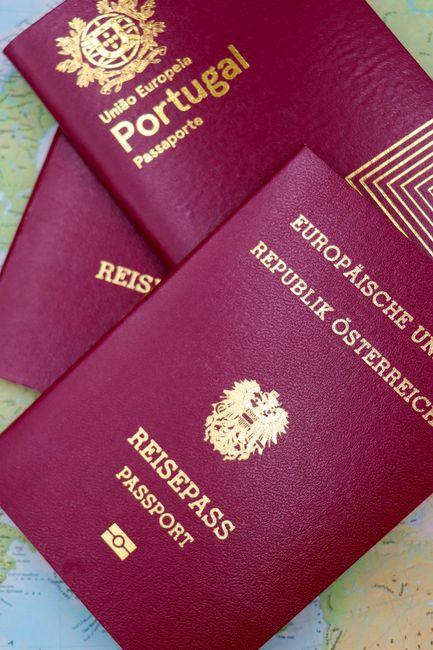
The Illusion of Freedom Behind Global Passports and Who They Leave Behind
Global passports are often touted as unparalleled gateways to freedom, fostering an illusion that possessing one equates to borderless opportunity and untethered mobility. Yet, this narrative glosses over the structural inequities embedded within the global mobility regime. The freedom imbued by powerful passports-those granting visa-free or visa-on-arrival access to numerous countries-is decidedly relative and exclusive, not universal. It commodifies citizenship itself, transforming it into a stratified asset rather than a fundamental right. Those with high-ranking passports navigate the world with ease, while billions remain tethered by restrictive visa barriers, irrespective of their economic or professional merits. This binary system reinforces global hierarchies, often mirroring historical patterns of privilege and exclusion under the guise of ‘neutral’ security protocols.
In confronting this paradox, it is critical to acknowledge the trade-offs between national sovereignty and individual mobility. Efforts to democratize passport power, such as investor citizenship programs, offer a complex solution riddled with ethical and practical pitfalls. Should mobility remain a privilege tied to economic capability, it risks deepening inequality instead of bridging it. To foster fairer access, policies must prioritize structural reforms-addressing not only diplomatic relations and reciprocity but also investment in regional mobility alliances and humanitarian exemptions. Consider this comparative insight:
| Aspect | Elite Passport Holders | Marginalized Populations |
|---|---|---|
| Visa Restrictions | Minimal, often visa-free globally | Numerous, including extensive visa requirements and rejections |
| Mobility Power Source | Embedded economic and geopolitical capital | Often tied to nationality, legal status, or socioeconomic barriers |
| Risk of Statelessness | Virtually none | High risk due to political instability, conflict, or exclusion |
- Recommendation: Advocacy should shift toward global frameworks that decouple mobility rights from socio-economic privilege.
- Insight: True freedom of movement demands more than a fancy passport-it requires dismantling the systemic chasms maintained by border politics.
Power Play in Travel Rights A Complex Currency Shaped by Inequality
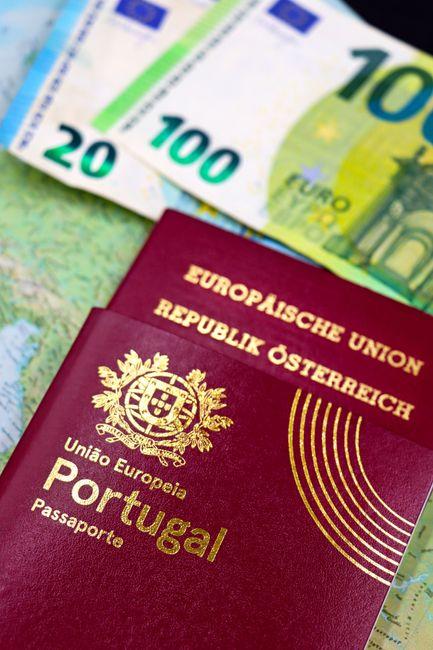
Global passports function far beyond mere travel facilitation; they are potent signifiers of geopolitical influence and economic privilege. The uneven landscape of travel rights is a form of currency that consolidates power in the hands of a few while marginalizing billions. Conventional wisdom often reduces passport disparities to bureaucratic inefficiencies or diplomatic disputes, but this perspective overlooks a deeper dynamic: travel rights are a deliberate tool wielded by states to control human mobility and preserve systemic inequalities. The ranking of passports, often celebrated or lamented in isolation, masks the underlying trade-offs where ease of travel for one group directly corresponds to restrictions faced by another. For instance, a citizen from an EU country enjoys visa-free access to over 180 destinations-a significant privilege-yet this freedom rests on the geopolitical stability and economic dominance of their nation, highlighting a structural imbalance rather than an innate right.
To decode the currency of passports, consider the following key distinctions:
- Mobility vs. Sovereignty: High-ranking passports grant unrestricted mobility but often require citizens to support extensive foreign policy mechanisms, such as military alliances and economic sanctions, that sustain their global privileges.
- Economic Leverage vs. Human Capital Flight: Countries with weaker passports face a paradox-restricting emigration to safeguard domestic stability often backfires by encouraging brain drain and underground migration networks.
- Short-Term Convenience vs. Long-Term Opportunity: Temporary travel liberalizations (e.g., pandemic-era visa waivers) can create illusions of progress without addressing entrenched inequities tied to nationality and race.
| Passport Type | Mobility Score | Underlying Power Factor | Primary Trade-Off |
|---|---|---|---|
| Western European | 180+ | Economic Dominance & Diplomatic Clout | Subsidizing Global Security |
| Middle East & North Africa | 50-70 | Political Instability & Regional Conflict | Restrictions Fueling Migration Pressures |
| Emerging Asian Economies | 90-130 | Rapid Economic Growth & Strategic Partnerships | Balancing Nationalism & Global Integration |
This nuanced framework reveals that passports are less about individual freedom and more an extension of nation-state power geopolitics. Aspiring travelers and policymakers alike must recognize these trade-offs rather than merely celebrating passport strength as an absolute good. A more equitable global mobility regime demands that we question the assumption that “strong passports” are inherently virtuous, while “weak passports” are simply unfortunate. Instead, addressing the entrenched inequalities requires confronting the political economies that structure who can move-and who must stay earthbound-often against their will.
Rethinking Mobility Privilege Beyond the Passport as a Status Symbol
Mobility privilege, often symbolized by the type of passport one holds, is traditionally seen as a straightforward indicator of global access and freedom. Yet, this narrow viewpoint glosses over the profound disparities embedded within the concept. A passport should not be reduced to a mere status symbol; rather, it is a complex tool whose power fluctuates based on geopolitical forces, individual circumstances, and domestic policies. For instance, a powerful passport may grant visa-free travel to most countries, but this ease of movement is frequently offset by barriers such as economic inequality, digital surveillance, and discriminatory immigration policies that disproportionately impact marginalized groups. Therefore, rather than uncritically celebrating passports as universal tokens of privilege, we must interrogate who benefits and who remains trapped in restrictive mobility regimes, often regardless of their document’s perceived ‘value.’
To truly rethink mobility privilege, we should shift focus beyond passport rankings to encompass:
- Accessibility of travel: Visa-free access versus visa-on-demand nuances matter far more than raw counts.
- Intersectional factors: Socioeconomic status, race, and nationality intersect to create vastly different mobility experiences, even among passport holders of the same country.
- Non-passport entitlements: Rights such as asylum, work permits, and residency opportunities often rival or exceed passport benefits.
Consider this comparison table illustrating two hypothetical passports and their underlying mobility privileges:
| Feature | Passport A | Passport B |
|---|---|---|
| Visa-Free Countries | 180+ | 70+ |
| Work Permit Requirements | Often required | Some countries offer automatic work rights |
| Asylum Protections | Limited | Robust legal support networks |
| Economic Access | High, but wealth inequality limits actual mobility | Lower, but targeted visa programs ease skilled migration |
Ultimately, cultivating a more nuanced understanding of mobility privilege demands acknowledging that passports are neither uniform nor absolute currencies of freedom. They embody layers of systemic inequality that require policy innovation and social awareness to dismantle. Mobility should be decoupled from narrow nationalistic pride, repositioned instead as a layered human right shaped by intersectional realities rather than symbolic capital alone.
When Access Becomes Advantage The Strategic Choices of Global Citizenship
Access as a form of power is often romanticized in discussions around global citizenship, but the reality involves a complex calculus of strategic choices rather than mere acquisition. Having a passport that opens multiple doors is undeniably advantageous, yet this advantage is conditional on one’s objectives, lifestyle, and the geopolitical landscape. Not all access is created equal; for example, a passport granting visa-free entry to emerging markets holds different value than one opening corridors to established economic powerhouses. The critical distinction lies in how global citizenship is leveraged-not simply as a travel enabler but as a tool for economic mobility, political influence, and security in an uncertain world. This nuanced view demands that individuals weigh the trade-offs between breadth and depth of access, balancing short-term freedoms with long-term stability and influence.
Strategic global citizens are increasingly selective, prioritizing quality over quantity in their passport portfolio. This means choosing countries that not only offer visa-free travel but also provide scalable economic opportunities, robust legal protections, and political neutrality. Often, these decisions pit the allure of traditional power hubs against emerging, less-saturated jurisdictions with untapped potential. Consider the table below, which illustrates the layered value of different types of passport access:
| Passport Type | Primary Advantage | Strategic Trade-off | Ideal For |
|---|---|---|---|
| Western Powerhouse | Global mobility & financial market access | High entry barriers; geopolitical risk exposure | Entrepreneurs, investors |
| Emerging Market Gateway | Access to rapid growth economies | Regulatory unpredictability | Business developers, innovators |
| Tax & Asset Haven | Financial privacy, wealth protection | Limited travel freedom | High-net-worth individuals |
Ultimately, the new currency of global citizenship demands discerning foresight rather than mere acquisition frenzy. The savvy global citizen continuously reassesses geopolitical shifts, adapts their portfolio accordingly, and uses access not as an end but as a means to multi-dimensional empowerment.
Unequal Passports and the Hidden Costs of Global Mobility
The idea that passports are equal gateways to opportunity is a comforting myth that collapses under scrutiny. In reality, passports are distributed on a spectrum of privilege, intimately tied to geopolitics, economic clout, and historical legacies. A German or Japanese passport is not just a travel document but a master key to 190+ countries, while holders from countries like Afghanistan or Syria face restrictive regimes, long visa queues, and pervasive suspicion. This inequality is not accidental but a deliberate reflection of global power hierarchies. The hidden costs of this disparity go beyond mere travel inconvenience-they shape access to education, employment, safety, and even basic dignity. The supposed “freedom” of global mobility is severely curtailed for millions, perpetuating systemic inequality that passport rankings barely quantify.
The trade-offs embedded in this system underline the complexity of global mobility economics. Highly ranked passports often come with opaque requirements like hefty investment schemes or taxing naturalization processes, which inadvertently commodify citizenship-turning movement and belonging into transactions, not rights. Conversely, countries with weaker passports face brain drain as their skilled citizens navigate toward greener pastures, exacerbating development gaps. Any credible reform agenda must acknowledge these nuances:
- Reform visa reciprocity: Align visa policies more closely with human rights and economic collaboration rather than retaliatory geopolitics.
- Transparent pathways: Demystify and democratize citizenship investment programs to avoid exploitation by the ultra-wealthy.
- Support mobility justice: Implement frameworks recognizing mobility as a basic social good, especially for vulnerable groups.
| Passport Tier | Average Visa-Free Access | Typical Hidden Costs |
|---|---|---|
| Tier 1 (e.g., Germany, Japan) | 190+ | Stringent security & background checks |
| Tier 2 (e.g., Brazil, India) | 120-140 | Moderate visa fees, wait times |
| Tier 3 (e.g., Afghanistan, Syria) | 30-50 | Complex visa applications, political scrutiny |
Ultimately, passports symbolize embedded power balances that reinforce, not dismantle, global inequalities. Advocating for global passports as “the new currency” should not obscure the urgent need to democratize mobility rights rather than fetishize privilege.
In Summary
In a world where borders are constantly shifting and opportunities are often gated behind invisible lines, global passports have emerged as more than just travel documents-they are passports to possibilities, influence, and privilege. Yet, this new currency of power remains elusive for many, reflecting deeper divides in access and equity. As we navigate this evolving landscape, it’s crucial to recognize that while a passport can open doors, the keys to those doors are unevenly distributed. Understanding this dynamic invites us to rethink notions of mobility, citizenship, and global belonging in the 21st century-reminding us that true power is not just about the ease of crossing borders, but about who gets to hold the map in the first place.




