
In an age defined by rapid globalization and digital connectivity, the very concept of borders and citizenship is undergoing a profound transformation. The emergence of global passports-a revolutionary idea proposing identification beyond the confines of traditional nation-states-promises to redraw the map of sovereignty as we know it. As this innovative approach challenges long-held notions of national identity, it compels us to reconsider what it means to belong, govern, and define ourselves in an increasingly interconnected world. This article explores how global passports could reshape sovereignty and ignite profound debates about identity in the decade ahead, heralding a new era where allegiance may transcend geography.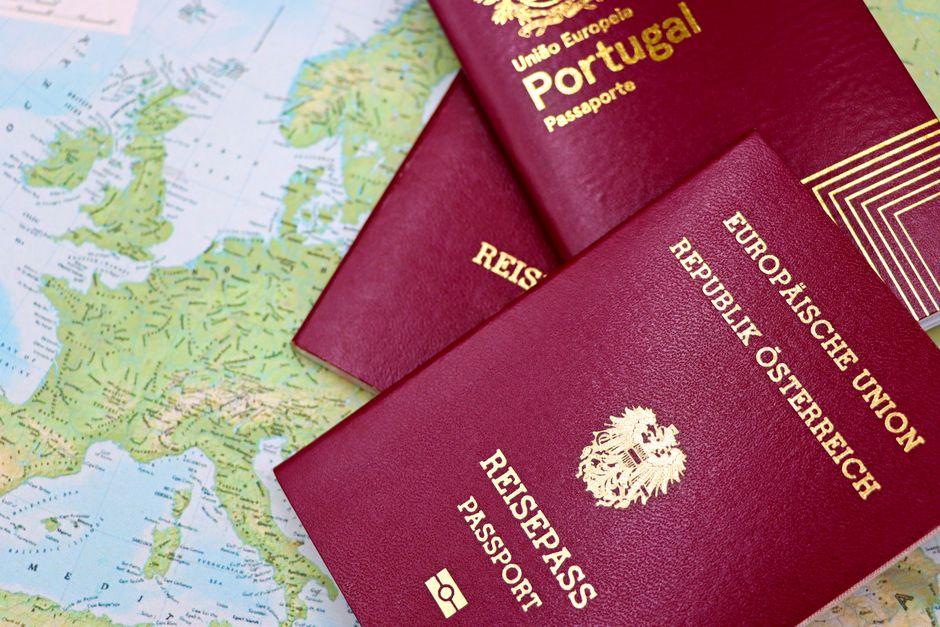
Rethinking Borders Beyond Bureaucracy How Global Passports Complicate Traditional Sovereignty
The traditional notion of borders as fixed, inviolable lines dictated by state sovereignty is increasingly at odds with the fluid realities introduced by global passports. These documents-often symbolizing citizenship in multiple jurisdictions or even transcending it-complicate the once straightforward bureaucratic mechanisms of entry, exit, and belonging. Crucially, global passports challenge the assumption that sovereignty equates to control over movement. They reveal a growing tension between states’ desire to manage populations within geographic boundaries and individuals’ capacity to navigate and assert identities in transnational spaces. This tension exposes a fundamental trade-off: maintaining rigid sovereignty risks alienating globally mobile citizens, while ceding control may dilute traditional national authority but enhance inclusivity and economic dynamism.
To navigate this conundrum, governments and policy-makers must embrace a nuanced approach that recognizes sovereignty as adaptable rather than absolute. Rather than viewing global passports as threats to national identity, states could pursue frameworks that integrate such documents into existing national legal systems without surrendering fundamental governance prerogatives. For instance, enhanced cross-border data sharing and multilayered security protocols can preserve security while respecting global citizenship’s fluidity. Consider the following distinctions guiding policy design:
- Rigid Sovereignty: Enforces strict border controls with limited recognition of multiple citizenships; prioritizes security over mobility.
- Flexible Sovereignty: Allows layered legal identities and cross-national rights; requires sophisticated international cooperation and trust.
| Policy Dimension | Trade-off | Recommendation |
|---|---|---|
| Border Security | Heightened security vs. smooth mobility | Integrate biometric and AI-enabled checks customized for global passport holders |
| Legal Status Recognition | Strict citizenship criteria vs. inclusive multi-jurisdictional identity | Implement dynamic legal frameworks recognizing dual/multiple affiliations while safeguarding fundamental rights |
Ultimately, rethinking borders beyond bureaucratic inertia requires acknowledging that sovereignty is no longer solely territorial but increasingly about governance agility. By adopting smart, selective policies that embrace the complexities global passports introduce, nations can preserve sovereignty’s relevance without succumbing to outdated exclusionary paradigms.
The Illusion of Universal Mobility Hidden Risks in the Promise of Global Citizenship
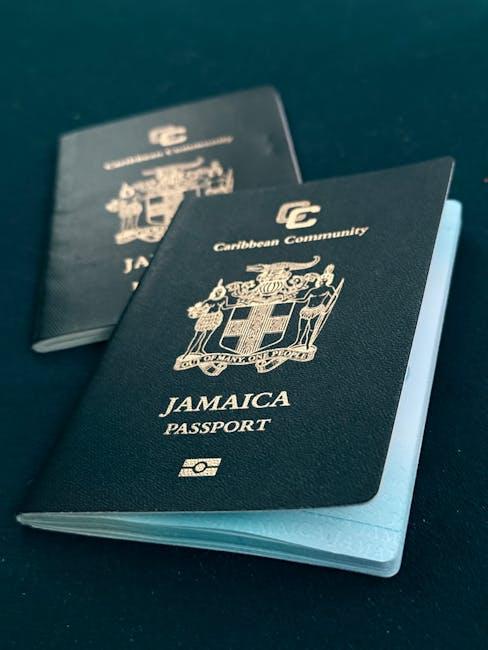
At first glance, the notion of universal mobility embedded in the global citizenship ideal seems an unequivocal triumph of the 21st century-where passports lose their exclusivity, allowing unrestricted movement across borders. Yet, this vision glosses over critical and often underappreciated risks. The so-called “universal passport” model assumes a level playing field in global mobility that simply does not exist. Instead, it risks perpetuating and even exacerbating existing inequalities masked under the rhetoric of borderlessness. For instance, access to these global mobility instruments often remains tethered to economic capital, technological infrastructure, and geopolitical alliances that discerningly select who gets to move freely-and who remains effectively immobile. Universal mobility thus becomes less about dismantling barriers, and more about consolidating privilege in a rebranded, ostensibly meritocratic framework.
Moreover, the promise of global citizenship through universal passports conceals a troubling trade-off: the erosion of meaningful national sovereignty in exchange for a homogenized, technocratic oversight of mobility rights. The diffusion of power in managing cross-border movement to transnational bodies or private consortia risks sidelining democratic accountability in immigration policies. Rather than a purely liberating force, this shift could institutionalize new layers of exclusion and surveillance under an opaque guise. To address these contradictions, policymakers and advocates must:
- Prioritize transparency in how global mobility rights are governed and who holds decision-making power.
- Embed mobility rights within broader human rights frameworks instead of isolated travel privileges.
- Ensure equitable access by dismantling economic and technological gatekeeping mechanisms that fragment the global population into mobile and immobile classes.
| Assumption Challenged | Reality & Critical Insight |
|---|---|
| Universal passports eliminate mobility inequality. | Economic and political capital still gatekeep access, deepening disparities under a veneer of inclusivity. |
| Global citizenship undermines traditional sovereignty. | Sovereignty transforms rather than disappears, shifting towards supranational governance with new accountability challenges. |
When Identity Becomes Fluid Navigating Cultural Cohesion Amid Transnational Credentials
As global passports facilitate cross-border mobility and foster hybrid identities, the once rigid boundaries of national identity begin to dissolve into a fluid continuum shaped by multiple cultural allegiances. This fluidity challenges the traditional notion of cultural cohesion, which presupposes a relatively homogenous, geographically bounded citizenry united by shared symbols, narratives, and civic rituals. However, in the emerging landscape of transnational credentials, clinging to static cultural identity risks eroding the social fabric rather than strengthening it. The key distinction lies in embracing a dynamic framework of cultural cohesion-one that privileges relational identity over lineage-based identity, and renegotiates belonging through inclusive, adaptable narratives rather than exclusionary myths. Such a recalibration demands a meticulous balance between celebrating pluralism and sustaining social trust, lest societies fragment into competing enclaves, each tethered more tightly to global networks than to local commonality.
Policy architects and cultural strategists must therefore navigate a host of nuanced trade-offs when addressing identity fluidity underpinned by global passports. Rather than defaulting to protectionist cultural policies or superficial multicultural platitudes, governments should pursue strategic integration mechanisms that:
- Recognize transnational credentials as complementary rather than contradictory to national identity, fostering dual or multiple allegiances without diluting civic responsibilities.
- Promote ‘glocal’ civic education models that cultivate intercultural competence alongside national narratives, enabling citizens to navigate complexity without losing a sense of rootedness.
- Facilitate cross-sector public dialogues that democratize conversations on identity, moving beyond elite-driven definitions towards a pluralistic social contract.
To pragmatically illustrate, consider the following table contrasting traditional and fluid identity paradigms:
| Aspect | Traditional Identity | Fluid Identity |
|---|---|---|
| Basis of Belonging | Ethnicity, territory, shared history | Multiple affiliations, global mobility, hybrid culture |
| Social Cohesion | Unity through common symbols & narratives | Negotiated belonging via dialogue & adaptability |
| Policy Approach | Assimilation or exclusion | Integration with respect for pluralism |
Ultimately, navigating the shift from monolithic to fluid identities requires an acute appreciation of cultural complexity as an asset rather than a threat-a mindset shift poised to underpin the next era of sovereignty redefinition.
Balancing Freedom and Control Strategic Trade Offs in Adopting Global Passport Systems
Adopting global passport systems demands a delicate recalibration between liberty and governance-one that few infrastructures can navigate without strategic compromises. The allure of borderless freedom, often championed as the hallmark of global passports, overlooks the inescapable need for control mechanisms to maintain security and order. It is not simply a binary of freedom versus control, but a spectrum where too much freedom risks eroding national security frameworks, and excessive control stifles the very fluidity these passports promise. Policymakers must resist the temptation of absolutism on either end, recognizing instead the essential duality of sovereignty that evolves rather than dissolves. This nuance is often lost in techno-utopian visions that prioritize frictionless travel without embedding robust verification and accountability protocols.
Smart adoption demands tailoring the trade-offs according to geographic, political, and cultural contexts, rather than pursuing a one-size-fits-all model. For instance, liberal democracies might emphasize privacy and cross-border data portability with transparent oversight, whereas states facing acute security threats may necessitate layered identity validation, even at the expense of some traveler autonomy. Here is a critical distinction:
| Dimension | Freedom-Weighted Approach | Control-Weighted Approach |
|---|---|---|
| Data Privacy | User-centric, minimal data shared | Comprehensive data profiling |
| Security Checks | Periodic and risk-based | Continuous and universal |
| Governance Model | Decentralized, multi-stakeholder | Centralized, government-led |
Ultimately, the strategic wisdom lies in hybrid architectures that leverage technological advancements-such as decentralized identities and blockchain for security-while embedding adaptive policy frameworks capable of responding to shifting geopolitical realities. Governments and international bodies should prioritize interoperability over homogenization, enabling diverse governance models to coexist and interoperate, rather than enforcing rigid standards that could provoke backlash or fragment trust. This balance moves beyond simplistic freedom-control debates, inviting a more sophisticated orchestration of sovereignty that acknowledges complexity and champions resilience rather than idealized uniformity.
Global Passports as a Catalyst for New Governance Models Beyond the Nation State
Global passports represent more than just a facilitation of cross-border mobility; they are an embryonic framework for governance that transcends the traditional sovereignty of nation-states. This shift undermines the classical Westphalian model, where territorial control and citizenship rigidly define political belonging and legal authority. Instead, global passports could catalyze a layered sovereignty model, blending multiple jurisdictional claims and governance logics into a single identity token. However, this is not an unambiguously positive evolution. The transition risks exacerbating existing inequalities between those who can access such credentials and those still tethered to exclusionary, state-specific documents. The key insight here is recognizing that global passports shouldn’t aim to erase national identities but rather to create functional multi-dimensional citizenship that respects cultural distinctiveness while operationalizing global rights and responsibilities.
Implementing global passports as governance tools demands careful trade-offs and calibrated policy innovations. Rather than pursuing a monolithic “one passport fits all” solution, an adaptive framework that encourages interoperability between global passports and local governance systems will prove more resilient. Such a framework must address crucial questions: How do we balance security concerns with seamless access? How can global credentials avoid becoming privatized privileges that deepen socioeconomic divides? And critically, how do we reconcile the tension between transnational loyalty and national allegiance? From a practical standpoint, stakeholders should explore hybrid governance models combining public oversight and decentralized technology platforms (like blockchain) to enhance transparency and accountability. The following table illustrates a strategic approach to designing global passport governance structures:
| Governance Dimension | Traditional State Model | Emerging Global Passport Model | Recommended Approach |
|---|---|---|---|
| Legal Authority | Territorial sovereignty, exclusive jurisdiction | Shared, overlapping jurisdiction based on identity, rights | Co-governance frameworks integrating local and global legal norms |
| Identity Verification | State-issued, centralized databases | Decentralized, interoperable digital identity | Hybrid verification combining biometric and blockchain tech with state oversight |
| Access & Equity | Dependent on birthright, nationality | Potentially universal but presently limited by digital divides | Inclusive policy interventions to bridge digital and bureaucratic gaps |
- Recommendation: Invest in multi-stakeholder dialogue that includes marginalized communities to democratize global passport design.
- Warning: Avoid over-reliance on technological determinism; governance is a social project, not a technical fix.
- Opportunity: Global passports could foster new, fluid political solidarities beyond the nation-state, reinventing identity politics for the global era.
Closing Remarks
As the contours of our world continue to blur, the advent of global passports signals more than just a new era of travel convenience-it reflects a profound shift in how we conceive sovereignty and identity. In embracing these transformative documents, we are invited to rethink the rigid borders that have long defined us, crafting instead a tapestry of shared experiences and collective belonging. The decade ahead will not merely challenge the nation-state; it will compel us to redefine what it means to belong in a world where the passport is no longer a symbol of division but a beacon of unity. In this unfolding narrative, the balance between global connection and cultural distinctiveness will shape the future of human identity itself.




