
In an era marked by geopolitical shifts, economic unpredictability, and tightening borders, the allure of passport-by-investment programs has captured the imagination of wealthy individuals worldwide. Often marketed as a golden ticket to swift mobility and unfettered freedom, these citizenship-for-sale schemes promise an escape hatch from local constraints and a passport to global opportunities. Yet, beneath the glossy veneer of instant access and luxury lies a more nuanced reality. Rather than a mere shortcut to personal liberty, passport-by-investment increasingly serves as a calculated safeguard-a strategic hedge against the swirling tides of global uncertainty. This article delves into why these programs are evolving beyond their image as quick-fix solutions and are becoming essential tools for navigating an unpredictable world.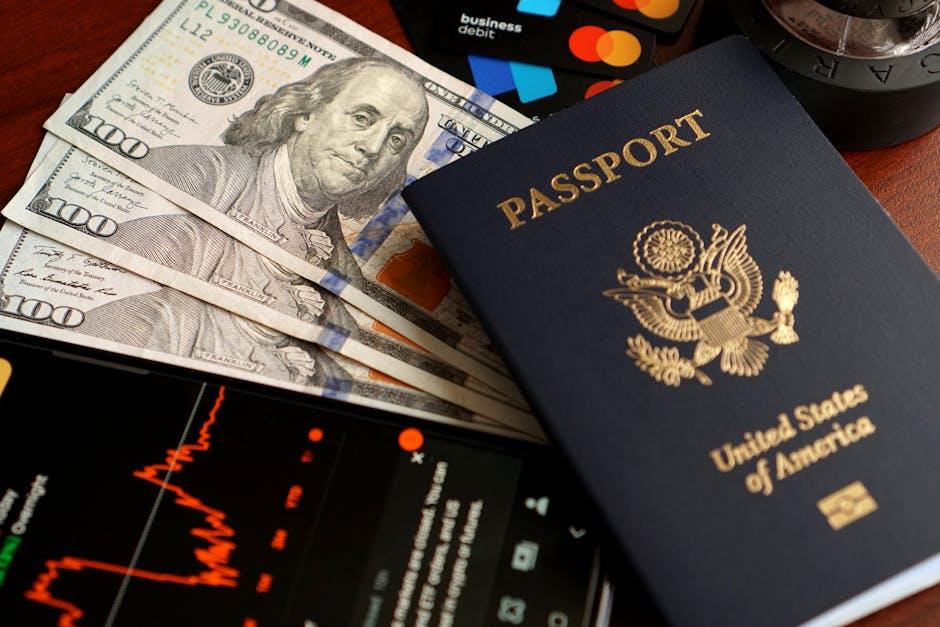
The Illusion of Instant Mobility and What It Masks About Global Risks
At first glance, passport-by-investment programs appear to offer immediate mobility-a seemingly frictionless ticket to an expanded travel horizon. However, this perception dangerously oversimplifies the geopolitical and socio-economic complexities underpinning global movement. The notion of “instant freedom” masks the reality that visa arrangements and cross-border access remain highly conditional, subject to volatile international relations and swift policy reversals. Moreover, the accolade of “freedom” tied to these passports is not universally equitable; the mobility they grant often caters primarily to the holder’s ability to invest, sidestepping deeper questions about genuine inclusivity or rights that citizens in more traditional contexts possess.
Understanding passport-by-investment as a strategic hedge rather than mere convenience allows for more sophisticated decision-making. Investors should weigh
- Geopolitical Stability: Opt for passports tied to nations with stable diplomatic ties over time, as this influences visa waivers and global access.
- Long-term Policy Risks: Consider how susceptible a country’s citizenship laws are to reform; aggressive tightening can erode benefits unexpectedly.
- Economic Diversification: Align choices with countries offering sustainable economic health rather than those dependent on narrow sectors vulnerable to shocks.
Ultimately, the allure of instant mobility can obscure the nuanced balance between immediate accessibility and the durable preservation of global options. Smart investors must resist the temptation of surface-level convenience and prioritize citizenships as multi-dimensional assets-portfolio diversifications against an unstable world order rather than quick passport hacks.
Behind the Glamour of Investment Passports Lies a Complex Web of Trade-Offs
The allure of investment passports often hinges on the promise of effortless access to new opportunities-whether economic, social, or geographic. However, this glossy perception glosses over the intricate trade-offs embedded in these programs. Far from being a mere shortcut to freedom, they represent calculated bets with substantial risks. First, the financial thresholds and investment structures are far from uniform or transparent; some passports demand significant liquidity tied up in illiquid assets or government bonds, effectively locking investors into specific economic landscapes. Second, there are unspoken geopolitical dimensions: a passport’s value is dynamically linked to the issuing country’s diplomatic standing and socio-political stability, variables that can soar or plummet with little warning. Thus, the true cost isn’t just monetary-it’s strategic vulnerability masked by the veneer of global mobility.
Moreover, the trade-offs extend into social and ethical arenas often overlooked by potential investors. Investment passports can inadvertently reinforce inequalities by privileging wealth over citizenship grounded in deeper societal ties. This raises critical questions about the broader implications of commodifying nationality. For those considering these programs, a nuanced approach is essential. Rather than chasing broad visa-free access, a smarter strategy targets passports that provide complementary value: diversification of geopolitical exposure, access to stable legal frameworks, and alignment with long-term personal and business goals. An informed investor must weigh:
- Liquidity vs. Political Risk: High investment thresholds may offer safer jurisdictions, but at the cost of capital flexibility.
- Speed vs. Sustainability: Fast-track citizenship comes with stricter regulatory scrutiny that can affect renewability and future mobility.
- Access vs. Integration: Visa-free travel is valuable, but actual local integration potential often remains limited, affecting lifestyle and business operations.
| Dimension | Common Assumption | Reality |
|---|---|---|
| Financial Commitment | One-time payment or low-risk investment | Often involves ongoing financial obligations and exposure to market fluctuations |
| Instant Freedom | Immediate and unconditional global mobility | Subject to geopolitical shifts, regulatory changes, and possible revocations |
| Social Acceptance | Seamless integration into new society | Limited social rights and local acceptance, risking isolation |
Why Relying on Passport-by-Investment Overlooks More Sustainable Security Strategies
Relying predominantly on passport-by-investment schemes risks oversimplifying the intricate challenges of global security and personal freedom. While these programs offer a rapid bureaucratic bypass, they often sidestep the foundational issues underpinning genuine mobility resilience-such as geopolitical volatility, evolving immigration policies, and international relations dynamics. True security strategies demand multifaceted approaches that balance legal flexibility, economic diversification, and robust risk management rather than simply acquiring an alternate nationality. Overemphasizing citizenship as a static asset overlooks the fragility of diplomatic ties and the potential for sudden legal restrictions that can render the second passport less effective.
Moreover, passport-by-investment can inadvertently funnel resources away from more sustainable safeguards. Individuals and businesses might do better investing in:
- Global digital identity solutions that enhance secure verification and ease cross-border transactions beyond nationality constraints.
- Strategically diversified asset portfolios across multiple jurisdictions to hedge geopolitical risks more holistically than a single citizenship can provide.
- Comprehensive legal residency programs that offer gradual integration and long-term stability rather than quick-fix status changes.
Here’s a quick comparative insight:
| Approach | Pros | Cons |
|---|---|---|
| Passport-by-Investment | Quick access to new nationality; perceived freedom boost | Exposure to shifting political landscapes; costly & potentially unstable |
| Diversified Residency & Assets | Long-term stability; mitigates risk across borders and economies | Slower process; requires deeper ongoing management |
In short, passport-by-investment is less a panacea and more a tactical hedge-one whose value fluctuates with global political winds. Thoughtful security planning must transcend quick nationality swaps, embracing more layered, resilient frameworks that anticipate not only opportunities but also the limits of citizenship as a tool in an increasingly unpredictable world.
Navigating Uncertain Times Through Citizenship as a Deliberate Portfolio Diversification
In an increasingly volatile geopolitical landscape, citizenship acquired through investment is often misconceived as a mere “fast track” to personal liberty. This narrow framing overlooks its strategic potential as a form of deliberate portfolio diversification-one that extends beyond financial assets to encompass geopolitical and social dimensions. Unlike liquid investments, a second passport is a quasi-physical hedge: it offers alternative jurisdictions for residence, education, healthcare, and political stability, cushioning individuals and families against systemic risks like economic downturns, regulatory clampdowns, or sudden shifts in diplomatic relations. This is not about chasing global freedom as an abstract ideal; rather, it’s a calculated bet on preserving options when the familiar nation-state context falters.
However, this strategy demands discriminating judgment. Not all citizenship-by-investment programs are equal in terms of risk mitigation or liquidity of benefits. For example:
- Political Stability: Some commonly promoted programs are embedded in countries with their own vulnerabilities-economic fragility or governance unpredictability-that can undermine the passport’s utility during crises.
- Accessibility vs. Acceptance: A passport’s value depends not just on visa-free travel but also on recognition by key global powers, access to financial systems, and the socio-political capital it confers.
- Cost vs. Return: The considerable financial outlay should be weighed against alternative options for risk diversification, including property investments, legal tax residency, or dual citizenship through ancestry.
A nuanced approach treats citizenship-by-investment not as a silver bullet but as a complementary asset class-one that demands ongoing reevaluation in line with shifting global dynamics. Here’s a snapshot comparison of three archetypal programs illustrating the trade-offs:
| Program Type | Geopolitical Stability | Visa Access Key Markets | Financial Outlay Approx. | Strategic Use Case |
|---|---|---|---|---|
| Caribbean (St. Kitts, Dominica) | Moderate | EU Schengen, UK, Canada | $100k-$200k | Cost-effective, regional flexibility |
| European (Malta, Cyprus) | High | Global Schengen, UK, US (via visa) | $700k-$1.5M | Strong geopolitical backup, premium market access |
| Middle East (Turkey) | Volatile | Moderate, emerging markets | $250k+ | Emerging market access, investment focus |
Making citizenship an integral part of a diversified, risk-managed portfolio requires discerning the trade-offs between ease, stability, and long-term utility rather than succumbing to oversimplified narratives about freedom. Only then does passport-by-investment evolve from a “shortcut” into a formidable tool against the unpredictable tides of the 21st century.
Unpacking the Subtle Limitations and Unexpected Benefits of Alternative Nationalities
While the allure of alternative nationalities often centers around enhanced mobility and financial opportunity, the reality is invariably more complex and demands a discerning eye. Acquiring a second passport through investment is rarely a panacea, more accurately a calculated maneuver crafted to mitigate specific geopolitical or economic vulnerabilities rather than an outright ‘fast lane’ to freedom. The subtle limitations surface in areas such as diplomatic protection, tax compliance, and socio-political integration; for example, many investors underestimate how second citizenships from smaller nations may offer visa-free access to fewer destinations or come with hidden stipulations that can impede long-term residency or naturalization rights. Moreover, these passports often do not grant immediate cultural or economic inclusion, which can curtail tangible benefits unless coupled with strategically planned relocation or business activities.
On the flip side, the unexpected benefits embedded in these alternative nationalities transcend mobility logistics. They serve as powerful instruments for risk diversification in an era of escalating global uncertainty-acting less like straitjackets of privilege and more like bespoke insurance policies. Investors should weigh these passports as part of a broader portfolio of strategic hedges, emphasizing attributes such as:
- Legal and financial sovereignty: Facilitating access to favorable tax jurisdictions and protective legal systems.
- Geopolitical leverage: Cushioning against sudden shifts in political regimes, sanctions, or travel bans impacting primary citizenship.
- Family resilience: Empowering future generations with alternative options in education, healthcare, and economic participation.
| Trade-off | Common Expectation | Strategic Reality |
|---|---|---|
| Visa-Free Travel | Instantly expansive global access | Variable, often limited to specific regions; requires ongoing monitoring |
| Social Integration | Seamless cultural assimilation | Potentially superficial without active engagement or residence |
| Tax Benefits | Significant reduction or elimination of tax burden | Complex compliance obligations; no universal tax immunity |
Ultimately, investors must avoid treating alternative nationalities as monolithic solutions and instead adopt a nuanced, case-by-case lens. This approach encourages prioritization of passports that align most closely with one’s geopolitical risk profile, lifestyle ambitions, and family planning, rather than chasing headline-grabbing citizenships that offer dazzling marketing but subdued practical value.
The Way Forward
As the world grows more interconnected yet unpredictably complex, the allure of passport-by-investment programs transcends the simplistic promise of an expedited escape route. Instead, these passports emerge as calculated instruments-strategic hedges crafted not just for immediate mobility, but for securing stability amid global fluctuations. Understanding this nuanced role shifts the conversation from viewing them as mere shortcuts to freedom, to recognizing them as vital components in a broader tapestry of risk management and future-proofing. In a landscape where certainty is elusive, holding multiple options may be the truest form of freedom we can pursue.




