
In a world where borders blur and cultures intertwine, the experience of holding dual nationality unfolds as a complex dance between distinct identities. “Between Two Worlds: Navigating Identity and Belonging in the Journey of Dual Nationality” delves into this nuanced existence, exploring how individuals weave together the threads of heritage, allegiance, and selfhood. This journey is neither linear nor simple; it is a continuous balancing act of embracing multiple narratives while seeking a place to truly belong. Through stories and reflections, we examine the challenges and triumphs of inhabiting two nations at once, revealing the evolving meaning of identity in an increasingly interconnected world.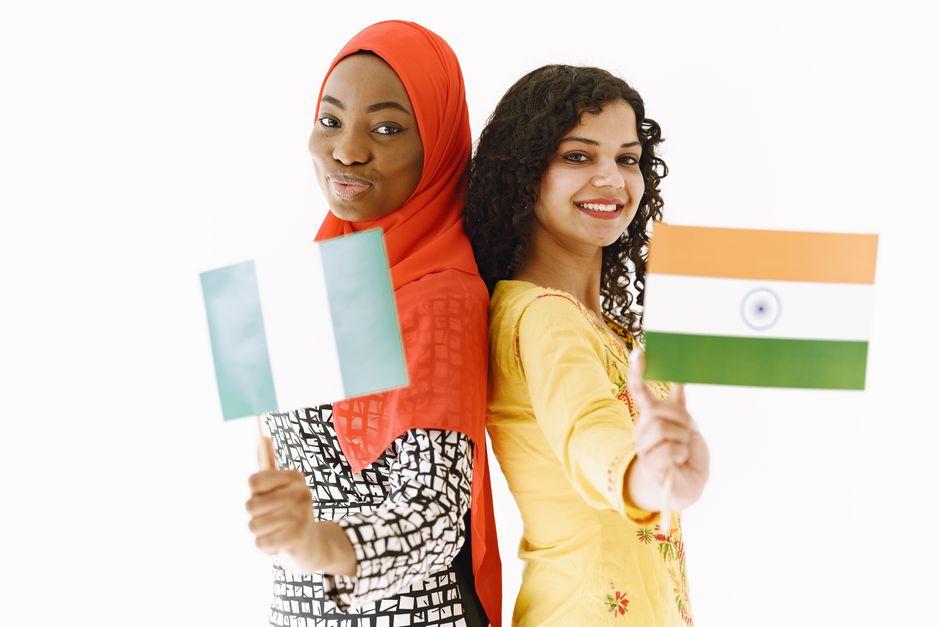
Roots Tangled Across Borders Finding Home in Familiar Strangers
Amira grew up hearing two languages under the same roof: her mother’s soft Spanish lullabies and her father’s stern English instructions. When she moved abroad for university, she expected a smooth transition, believing her dual nationality would grant her a ready-made sense of belonging. Yet, she found herself in an unexpected middle ground-too foreign for one community, not foreign enough for the other. The familiar faces around her spoke with accents she recognized, shared cultural references she understood, yet the deep-rooted belonging she craved felt elusive. This tangled web of roots often leads dual nationals like Amira to find “home” not in a place, but in moments of connection with familiar strangers-people whose experiences mirror their own, highlighting the universal search for identity across borders.
This experience, repeated countless times by individuals navigating bicultural landscapes, challenges the neat boxes society often assigns. It shines a light on an important lesson: belonging is less about geography and more about the communities we build and the stories we share. From bustling city neighborhoods where immigrant families gather, to virtual forums filled with voices from around the globe, these intersections become modern meeting points of heritage and identity. Below is a glimpse into how these dynamics manifest differently across age groups and contexts, illustrating the nuanced dance between expectation and reality:
| Aspect | Younger Generation | Older Generation |
|---|---|---|
| Expectation | Seamless blending of identities, access to both cultures without friction | Strong attachment to homeland, cultural preservation as priority |
| Reality | Often caught between cultures, feeling ‘othered’ in both | Challenges adapting to new societal norms, sometimes feeling isolated |
| Finding Home | Peer groups with similar mixed backgrounds, online communities | Close-knit family units, cultural traditions as anchors |
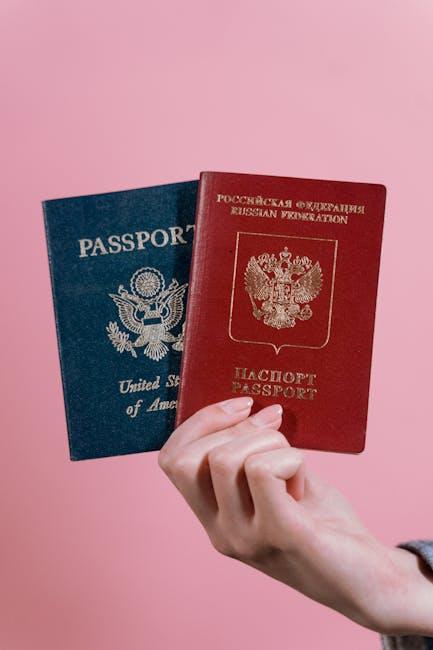
The Quiet Struggle of Speaking Two Cultural Languages
For many dual nationals, speaking two cultural languages isn’t simply about mastering vocabulary or grammar-it’s a daily negotiation of identity. Take Sofia, born to a Colombian mother and a French father. At family gatherings in Paris, she effortlessly switches to French, adopting an encouraging tone and lively gestures. Yet, when she calls her abuela in Bogotá, her words slow, nuanced with the warmth and softness that reflect Colombian Spanish. This fluidity, while a bridge between two worlds, often sparks moments of self-doubt. Sofia recalls attending a school debate in France where her accented French was subtly questioned, making her second-guess her eloquence despite her fluency. The tension between belonging and alienation can arise unexpectedly, highlighting the emotional labor behind every conversation.
The challenge lies not just in language proficiency but in the unspoken expectations from each cultural community. Consider the subtle contrasts in communication styles-where the directness appreciated in one language may seem brusque in the other, or where humor is lost in translation, leading to awkward pauses or misunderstandings. These everyday realities teach invaluable lessons on cultural empathy and adaptability. Dual speakers often develop a keen sensitivity to context, learning when to conform or resist certain norms. Below is a snapshot of common contrasts experienced by dual-language speakers and the adaptive strategies they employ:
| Aspect | Culture A Expectation | Culture B Expectation | Adaptive Strategy |
|---|---|---|---|
| Directness | Concise and straightforward | More diplomatic and indirect | Modulating tone based on audience |
| Humor | Witty and sarcastic | Playful and ironic | Choosing culturally relevant jokes |
| Emotional Expression | Reserved | Expressive and warm | Balancing emotional cues appropriately |
- Lesson: Mastery goes beyond language itself-it’s about reading the cultural room.
- Reality: Being bilingual means constantly recalibrating your voice to resonate authentically in each context.
When Traditions Collide A Tapestry of Celebration and Confusion
Imagine Amira, born to Moroccan parents but raised in Sweden, navigating the festive seasons that define each culture. When Ramadan coincides with the Swedish Christmas, she faces a unique crossroads: fasting during the day but wanting to partake in the warmth of Christmas Eve with her Swedish friends. The moment she decides to join a Christmas dinner after sundown, she confronts a complex mix of joy and confusion-not just for herself, but for those around her. Her friends don’t fully understand why she doesn’t eat all day, while her family questions celebrating a holiday so distinctly non-Islamic. This blend of traditions often leads to a mosaic of feelings-pride in embracing both her roots and the culture she grew up in, yet sometimes a subtle alienation when neither world feels entirely her own.
These experiences illustrate common tensions in dual nationality celebrations, where the expectation of seamless integration clashes with reality. For many, holidays become a microcosm of identity struggles-a time when cultural practices either collide or blend imperfectly. Consider a family dinner where traditional dishes from two homelands appear side by side:
| Tradition | Expectation | Reality |
|---|---|---|
| Diwali | Full immersion in bright festivals with extended family | Celebrated with a small group, mixing traditional sweets with local treats |
| Thanksgiving | Gathering involving all relatives, sharing gratitude and turkey | Intimate meal with just a few friends, sometimes substituting turkey with vegetarian dishes |
- Lesson: Celebrations aren’t about perfect adherence, but evolving practices that honor multiple identities.
- Decision moments: Choosing which traditions to prioritize, modify, or create anew.
- Understanding: That embracing dual traditions can enrich one’s sense of belonging, even if it challenges conventional norms.
Crossroads of Identity Lessons Learned From Living Between Worlds
Imagine Maya, who grew up speaking two languages fluently-her mother’s gestures rich with tradition, her classroom conversations filled with modern slang. She often found herself caught in moments where her identities clashed: the expectation to preserve her cultural heritage at family dinners versus the urge to blend effortlessly into her peers’ social circles. These crossroads spotlight a pivotal lesson for many with dual nationality: identity is less a fixed point and more a dynamic negotiation. It’s about learning when to lean into one culture and when to embrace the other, often deciding this in real time based on context rather than a pre-set blueprint. For Maya, the key realization was that her belonging didn’t have to be exclusive; instead, her ability to navigate these worlds became a unique strength.
In practice, these moments require tangible decisions-from which holidays to celebrate and how to share inherited stories, to choosing which community events to attend or which political debates to engage in. The initial expectation might be to feel fully “at home” in both spaces, but many find that the result is more complex-sometimes a sense of being in-between rather than fully inside either world. Here’s a quick look at how this tension often plays out:
| Expectation | Reality | Lesson Learned |
|---|---|---|
| Full acceptance in both communities | Feeling partially understood in each, but never completely | Embrace the fluidity of belonging and craft a personalized identity |
| Clear-cut cultural identity | A layered identity that adapts across contexts | Flexibility and adaptability become core skills |
- Decision-making becomes less about choosing sides and more about honoring multiple narratives simultaneously.
- Resilience grows from navigating societal expectations that sometimes conflict with personal feelings of belonging.
- Communication sharpens-the need to explain and reinterpret cultural nuances for different audiences fosters deeper empathy.
Building Bridges From Difference to Belonging Through Shared Stories
When Amina moved between her two homelands, she didn’t just carry a passport-she carried a mosaic of stories. At family gatherings, she noticed the subtle gaps where her American cousins spoke fluently about sports she barely followed, while her Sudanese relatives reminisced about festivals she only witnessed in glimpses. Rather than viewing these differences as barriers, Amina began sharing her own tales: how she navigated Thanksgiving dinners with traditional Sudanese dishes or celebrated Eid in Minneapolis winters. These stories sparked conversations that revealed unexpected common ground, turning cultural contrasts into connective threads. It was a reminder that bridging identities isn’t about erasing difference but about weaving it into a shared tapestry.
Consider Javier, a young professional juggling his Mexican and Canadian roots. Initially, he expected uniform acceptance in both communities, only to encounter subtle skepticism fueled by assumptions about his “authenticity.” Instead of retreating, Javier invested time in storytelling-recounting his experiences growing up bilingual, celebrating Dia de los Muertos alongside Canada Day, and grappling with questions about where “home” truly was. These narratives not only humanized his journey but also invited dialogue, fostering empathy and shifting perceptions. In practice, building bridges through shared stories can look like:
- Hosting cultural exchange dinners where each person brings a dish and story from their heritage.
- Creating digital storytelling projects that capture plural narratives in families with mixed backgrounds.
- Encouraging open family discussions about evolving traditions and the meaning of identity.
| Expectation | Reality | Lesson Learned |
|---|---|---|
| Instant belonging by embracing dual identity | Encountered skepticism and cultural misunderstandings | Belonging grows through shared vulnerabilities and stories |
| Separate identities must remain distinct | Found overlap in values through storytelling | Difference and belonging are complementary, not opposing |
| Silence avoids conflict | Conversation opened doors to empathy | Dialogue is essential for connection across cultures |
Future Outlook
In the delicate dance between two homelands, those who hold dual nationality navigate a landscape rich with both challenge and possibility. Their journey is not simply about borders or passports-it is an ongoing negotiation of identity, culture, and belonging. To exist between two worlds is to embrace complexity, to hold space for multiple truths, and to weave together diverse threads into a unique tapestry. As the world grows ever more interconnected, these stories of dual nationality remind us that belonging is not always defined by geography, but by the ever-evolving sense of self. In embracing this fluidity, we open doors to greater understanding-not just of others, but of the multifaceted nature of identity itself.




