
In a world where borders seem both more connected and yet increasingly complex, a second passport is no longer just a fancy stamp in your travel binder. It’s a subtle yet formidable asset-an unseen key that unlocks unexpected doors in the realms of finance, security, and personal freedom. Beyond the allure of visa-free holidays, foreign citizenship quietly reshapes your global identity, unlocking privileges and protections that ripple far beyond jet-setting. This hidden power play of foreign passports reveals why your second citizenship is not merely a travel document, but a strategic move in the intricate game of globalization.
The Silent Leverage of Dual Nationality Beyond Border Crossing
Dual nationality is frequently boxed into the mythical realm of “easier travel,” but its silent leverage runs far deeper-into the very fabric of global socio-economic mobility and geopolitical maneuvering. Beyond visa waivers and border crossing facilitation, a second passport serves as a multi-dimensional tool of advantage, often enabling holders to circumvent restrictive domestic policies, access new economic landscapes, and employ legal arbitrage at an institutional level. For instance, dual nationals gain entrée into job markets traditionally closed to foreigners, bypassing onerous work permits and residency quotas. This underrecognized utility challenges the conventional wisdom that passports are primarily travel documents; instead, they are keys to participation in alternative socio-political ecosystems.
However, this power unleashes complex trade-offs. Dual citizens must navigate competing national loyalties, tax obligations, and regulatory discrepancies, where the benefits of a second nationality might introduce heightened scrutiny or complexities in compliance. A nuanced appreciation reveals that the true value lies not in possessing multiple passports per se, but in how individuals strategically leverage the differential legal and economic privileges that each nationality affords. In practice, optimal utilization often requires weighing:
- Economic access: Leveraging dual nationality to tap into favorable business environments or social programs.
- Political agency: Exercising voting rights or political participation across jurisdictions.
- Legal protection: Using consular protection and alternative legal frameworks.
- Identity management: Balancing personal and professional identity in a globalized context.
| Aspect | Typical Benefit | Potential Drawback |
|---|---|---|
| Travel Freedom | Visa-free entry to multiple countries | Can trigger assumptions of dual loyalty |
| Tax Planning | Access to more favorable tax regimes | Complex multi-jurisdictional compliance |
| Social Mobility | Educational and employment opportunities | Possibility of residency and cultural conflicts |
In sum, the silent leverage of dual nationality is less about the passport’s physical ability to open borders and more about the strategic corridors it creates within a globalized legal and economic landscape. Recognizing this allows for a recalibrated discourse on second citizenship-one that integrates its multifaceted global game-changing potential beyond mere travel convenience.
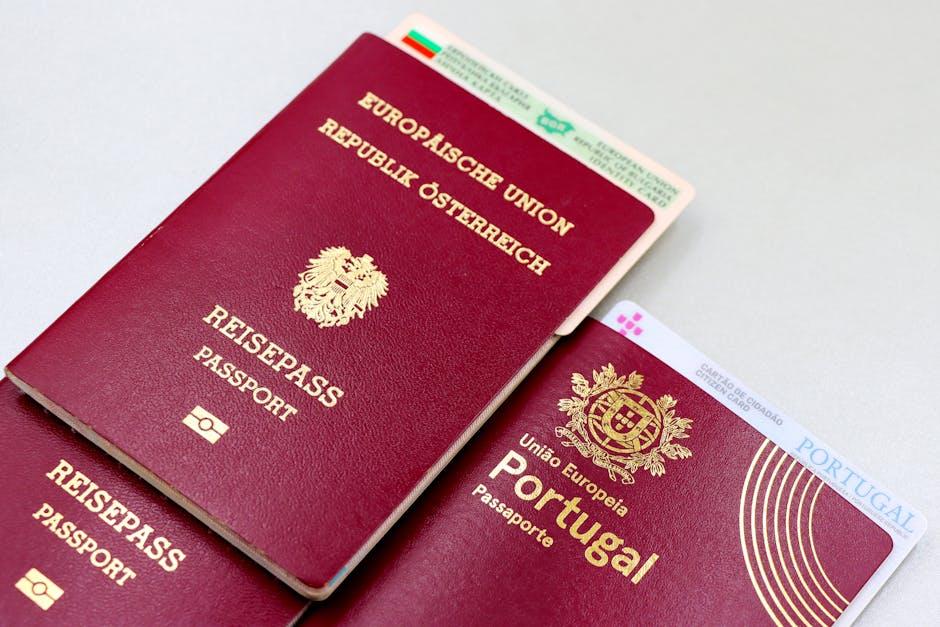
When Second Passports Backfire Exploring Unseen Risks and Complexities
Second passports often come glamorized as silver bullets-unlocking visa-free travel, tax benefits, and a political safety net. However, this glossy allure masks intricate risks that can unravel personal and financial stability. For instance, dual citizenship can trigger complex tax obligations, including potential double taxation or unexpected reporting requirements under laws like FATCA (Foreign Account Tax Compliance Act). Those chasing the “easy route” citizenship through investment programs may overlook geopolitical volatility; countries offering fast-track passports can rapidly alter policies or face international backlash, rendering citizenship less valuable or even a liability. Moreover, having a second passport can lead to conflicting loyalties or complications during geopolitical crises, such as travel restrictions or even revocation of citizenship-an often-ignored legal gray area that demands serious scrutiny before pursuit.
Negotiating these pitfalls requires nuanced trade-offs. It’s critical to distinguish between the convenience of a second passport and true strategic empowerment. While many seek global mobility, a second citizenship should be viewed more as an asset class-subject to market volatility, regulatory shifts, and geopolitical tensions-rather than a mere travel document. Before acquisition, one must weigh:
- Country stability: Political, economic, and legal resilience over time
- Tax regime: Compatibility and transparency in tax reporting across jurisdictions
- Diplomatic footprint: Consular support and bilateral relations that affect travel freedom
A well-chosen second passport can amplify opportunities dramatically, but a poorly considered one can backfire, tethering holders to new vulnerabilities that outweigh benefits. Discerning investors and globetrotters should prioritize depth of due diligence over superficial allure, embracing the complexity rather than minimizing it.
Reevaluating Second Citizenship The Myth of Unlimited Freedom and Security
Second citizenship is often sold as a panacea-an all-access pass to unlimited freedom and security, a geopolitical insurance policy without expiration. This narrative, however, oversimplifies a fundamentally complex tool. While a foreign passport undeniably extends your mobility and can serve as a hedge against local instability, it is far from a carte blanche. Governments continuously recalibrate visa regimes and tax laws, eroding the absolute privileges these documents once conferred. Moreover, the notion of “security” is double-edged: unrestricted travel often invites increased scrutiny and regulatory challenges, especially for individuals juggling dual loyalties under the watchful eyes of immigration and financial authorities worldwide. In essence, the myth of a second passport as an unfettered gateway to freedom ignores the subtle but real compromises in autonomy, privacy, and legal complexity.
To navigate this terrain wisely, one must engage in strategic discernment rather than passive acquisition. Ask yourself not only what the passport can get you, but also what obligations and compromises it entails. For example:
- Will the second citizenship require declaration of global assets, possibly triggering dual taxation?
- Does it expose you to mandatory military service, jury duty, or other national responsibilities unexpectedly?
- Does the issuing country maintain stable diplomatic relations that won’t shift overnight?
Such questions reflect the nuanced trade-offs inherent in holding multiple citizenships. Below is a simplified risk-benefit snapshot for common second citizenship motivations:
| Motivation | Potential Benefit | Potential Trade-off |
|---|---|---|
| Travel Freedom | Visa-free access to more countries | Increased border scrutiny, complex renewal policies |
| Financial Security | Investment opportunities, tax planning | Increased transparency demands, reporting obligations |
| Political Stability | Exit option from unstable homeland | Less direct political influence, identity questions |
Ultimately, a second passport should be viewed not as a silver bullet but as a multifaceted asset with conditions and contingencies. True advantage comes not from blind pursuit but from informed stewardship, where trade-offs are anticipated and managed rather than ignored.
Second Passports versus Residency Programs A Strategic Deep Dive
At the heart of the citizenship-for-investment conversation lies a critical fork: choosing between second passports and residency programs. While both pathways ostensibly grant global mobility and economic flexibility, they serve fundamentally different strategic purposes. A second passport is not just about circumventing visa restrictions-it is a powerful sovereign tool that confers political protection, tax advantages, and identity security. Residency programs, conversely, often tether holders to host countries’ economic ecosystems and legal frameworks without the full autonomy of citizenship. This distinction is crucial. Residency is a stepping stone, not an endgame. For those seeking mobility alone, residency can suffice, but the added layers of voting rights, diplomatic protection, and generational transferability with citizenship set second passports apart as durable assets, not just temporary solutions.
However, the allure of citizenship programs can be misleading if not dissected critically. They often come with steep financial thresholds, rigorous due diligence, and potential political risks if the issuing nation’s international standing shifts. Residency programs, though sometimes less glamorous, offer flexibility and lower upfront costs, making them preferable for investors wary of geopolitical volatility or unwilling to sever primary national ties. The real strategic insight is to evaluate your objectives against key trade-offs:
- Time Horizon: Immediate mobility needs vs. long-term legacy planning
- Financial Commitment: One-time citizenship investment vs. ongoing residency maintenance
- Legal Entitlements: Full political rights vs. limited civil rights
- Risk Profile: Stability of issuing country vs. fluidity of residency permits
| Criteria | Second Passports | Residency Programs |
|---|---|---|
| Political rights | Yes (voting, protection) | No |
| Mobility freedom | High | Moderate to high (dependent on residency) |
| Investment scale | High | Usually lower |
| Generational transfer | Typically permitted | Rarely permitted |
| Ongoing obligations | Minimal | Residency renewals, possible local taxes |
A strategic investor should resist the temptation to chase citizenship purely for borderless travel perks or prestige. Instead, embed your decision in a macro understanding of geopolitical tides, personal legacy desires, and financial realities. Second passports offer unparalleled sovereignty but demand patience, capital, and risk acceptance; residency programs buy into opportunity with broader accessibility but less control. Ultimately, the smartest path isn’t universally prescribed-it’s the one aligned with your nuanced, evolving global strategy.
Balancing Act The Ethical and Practical Consequences of Holding Multiple Nationalities
Holding multiple nationalities is often glamorized as an unequivocal advantage-offering enhanced mobility, diverse opportunities, and a strategic hedge against geopolitical instability. Yet, this notion glosses over the complex ethical and practical tightrope it forces individuals to navigate. Dual or multiple citizenships inherently involve divided loyalties, both perceived and real, raising questions about where an individual’s obligations truly lie in matters of taxation, military service, and civic responsibility. The hard trade-off here is between flexibility and exclusivity; while multiple passports open doors, they can equally complicate matters of allegiance and identity, especially when the countries involved have conflicting political interests or incompatible legal expectations. This is not a mere inconvenience but a nuanced dilemma that demands proactive, informed decision-making rather than passive acquisition.
The ethical balance becomes even more intricate when viewed through the prism of global inequality and citizenship commodification. While wealthy individuals exploit second passports as tools of privilege, security, and economic optimization, the broader implication touches on sovereignty and fairness-effectively creating a tiered system of belonging where nationality can be bought or leveraged beyond traditional meritocratic means. To navigate this terrain wisely, potential multiple nationals should consider:
- Long-term civic engagement: Can you genuinely commit to contributing to multiple countries, or is one simply a fallback?
- Legal compliance complexity: Are you prepared for tax filings, mandatory conscription, or legal disputes arising from competing jurisdictions?
- Personal identity coherence: How will holding multiple citizenships affect your sense of belonging and responsibility on a personal level?
| Aspect | Ethical Consideration | Practical Trade-Off |
|---|---|---|
| Tax Obligations | Fair contribution vs. potential double taxation | Complex compliance, potential financial cost |
| Military Service | Duty to defend vs. risk of conflicting demands | Possible legal or moral entanglement |
| Civic Participation | Active engagement vs. symbolic citizenship | Time and effort constraints |
Ultimately, juggling multiple nationalities is less about accumulating passports and more about cultivating a coherent and ethical global identity. This demands an informed, deliberate stance that acknowledges the geopolitical and personal contradictions at play-a balancing act that few treat with the seriousness it merits.
Insights and Conclusions
In a world where borders often define opportunities, a second passport quietly reshapes the rules of the game. Beyond visa-free travel and holiday escapes, foreign citizenship can offer a strategic edge-unlocking economic gateways, safeguarding futures, and expanding personal freedoms in unpredictable times. As global dynamics continue to shift, the true value of holding multiple nationalities reveals itself not merely as a convenience, but as a nuanced power play-one that redefines identity, security, and possibility on the world stage. Whether sought for protection, prospects, or peace of mind, your second citizenship stands as a subtle yet profound testament to the evolving nature of belonging in an increasingly interconnected world.




