
In an era defined by shifting borders, economic volatility, and unpredictable political landscapes, the quest for a second passport has transcended the realm of leisurely travel ambitions. What was once seen primarily as a gateway to new destinations is now emerging as a strategic shield-a calculated response to the uncertainties that ripple across our interconnected world. This pursuit, often framed as a mere convenience for jet-setters, reveals itself as a profound maneuver for personal security, financial resilience, and access to opportunities beyond the constraints of a single national identity. Exploring why chasing a second passport is far more than a travel luxury uncovers the nuanced ways individuals are navigating global instability with foresight and intent.
The Mirage of Mobility The Unexpected Costs Lurking Behind Dual Citizenship
Dual citizenship is frequently glorified as a seamless gateway to freedom and flexibility, but this portrayal glosses over a complex landscape of obligations and costs-both financial and bureaucratic. While the allure of multiple passports suggests effortless global mobility, the reality often includes tangled tax responsibilities, mandatory declarations, and potential legal entanglements. For instance, U.S. citizens with dual nationality face unique challenges due to the country’s citizenship-based taxation system, which demands reporting global income regardless of residence. This can lead to unexpected liabilities, compliance burdens, or even accidental noncompliance, undermining the perceived ease of global mobility. Beyond taxes, some nations impose compulsory military service, financial audits, or restrictions on holding certain government positions, which might counterintuitively limit one’s freedoms rather than expanding them.
When weighing the decision to acquire a second passport, it’s crucial to move past marketing slogans and assess *true strategic value* against potential pitfalls. The decision matrix should include:
- Long-term financial transparency: Understand the full scope of tax reporting, filing fees, and potential double taxation-especially with countries lacking robust bilateral agreements.
- Legal obligations and civic responsibilities: Factor in residency requirements, compulsory national duties, or loss of rights in either country due to conflicting laws.
- Geopolitical volatility: Recognize that a dual nationality can be leveraged against you during diplomatic disputes, including travel bans or asset freezes.
| Aspect | Potential Benefit | Hidden Cost or Risk |
|---|---|---|
| Taxation | Access to multiple tax systems, possible tax optimization opportunities | Complex filing obligations, exposure to double taxation, penalties for errors |
| Legal Status | Right to work, vote, and reside in multiple countries | Conflicting laws, mandatory national duties, risk of losing rights |
| Geopolitical Protection | Backup options amid political unrest or threats | Nationality-based discrimination, travel restrictions due to diplomatic tensions |
In short, dual citizenship is less a magic key and more a multifaceted tool that demands individual calibration. The savvy passport seeker should approach it not as an escape hatch but as a sophisticated investment balancing freedom with responsibility, flexibility with cost, and opportunity with nuance.
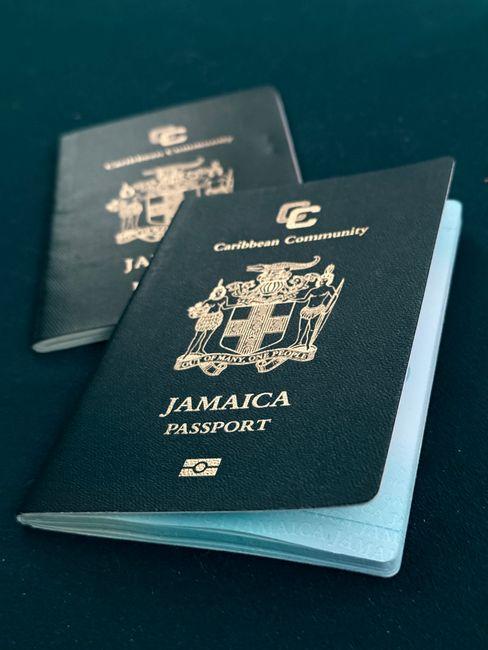
Beyond Borders Rethinking the True Value of Second Passports in an Unstable World
Second passports have long been romanticized as golden tickets for globetrotters seeking visa-free access and leisure travel perks. However, this perspective drastically underestimates their strategic value in today’s volatile geopolitical and economic landscape. Beyond convenience, second citizenships serve as a critical hedge against systemic risks – governmental instability, drastic policy shifts, and sudden economic downturns. Savvy individuals are no longer just chasing low-entry visa lists; they are prioritizing factors like robust legal frameworks, political neutrality, and economic resilience in their chosen jurisdictions. This nuanced approach recognizes that a passport’s true worth lies in durability and predictability, not just mobility. For instance, countries with entrenched democratic institutions and transparent legal systems instantly confer advantages far more tangible than the allure of tax shelters or luxurious lifestyles.
That said, pursuing a second passport is an exercise in trade-offs that demands a deep understanding of global risk matrices. Not all citizenship programs are created equal, nor are they equally future-proof. Countries offering rapid citizenship-by-investment may seem attractive, but these often come with trade-offs in terms of international acceptance or the risk of policy retraction. The savvy investor must evaluate key variables such as:
- Political Climate: Stability and rule of law trump short-term advantages.
- Economic Fundamentals: Strong, transparent economies safeguard assets better.
- Diplomatic Relations: A passport’s power is linked to global perception and alliances.
| Aspect | Quick Citizenship Programs | Established Democracies |
|---|---|---|
| Processing Time | Months | Years |
| Political Stability | Moderate to Low | High |
| Global Acceptance | Variable | Strong |
Ultimately, the recipe for maximizing a second passport’s true value is to resist the siren call of superficial ease and instead pursue a meticulously curated portfolio of citizenships aligned with one’s long-term security priorities. Navigating this landscape calls for strategic agility, legal expertise, and a clear-eyed appraisal of future uncertainties rather than simplistic, travel-centric motivations.
Second Passport Strategies When Global Uncertainty Demands More Than Just Escape Plans
When global uncertainty escalates, the value of a second passport shifts dramatically from mere convenience to a critical hedge against geopolitical or economic volatility. However, not all second passport strategies are created equal. The typical race toward Caribbean citizenship-by-investment programs, while fast and affordable, often falls short of delivering meaningful strategic security due to limitations in visa access, political stability, and global perception. Instead, savvy individuals should evaluate second passport options through a multifaceted lens:
- Geopolitical resilience: Prioritize countries with neutral diplomatic stances and robust governance structures, reducing susceptibility to sudden policy shifts or sanctions.
- Economic diversification: Favor passports from nations offering access to multiple economic blocs or financial systems to safeguard wealth and mobility.
- Consular support and legal protections: Consider the strength and reach of diplomatic networks, which can prove essential during crises.
Understanding these nuances underscores that a second passport isn’t a one-size-fits-all escape hatch; it’s a tactical asset that demands trade-offs. For instance, while European passports often require more stringent residency or investment commitments, they typically provide superior travel freedom and stronger institutional protections. Conversely, some expedient options may risk long-term validity or be subject to abrupt policy reversals. A prudent approach weighs these factors on a spectrum rather than chasing solely speed or cost-effectiveness:
| Passport Attribute | Fast Process (e.g., Caribbean CBI) | Strategic Security (e.g., EU Residency/Citizenship) |
|---|---|---|
| Processing Time | 3-6 months | 1-3 years |
| Visa-Free Access | ~140 countries | ~180+ countries |
| Political Stability | Moderate | High |
| Consular Support | Limited | Extensive |
True strategic value requires moving beyond simplistic escape plans that focus solely on mobility or tax benefits. Instead, individuals must approach second citizenship as a dynamic, long-term component of their global asset and risk management portfolio-tailoring their choice to evolving geopolitical realities, personal circumstances, and long-term resilience rather than transient convenience.
Navigating Complex Trade-Offs Between Privacy Sovereignty and Strategic Security
In the pursuit of a second passport, the interplay between privacy sovereignty and strategic security is not merely a balancing act but a landscape riddled with inherent trade-offs that defy simplistic categorizations. Privacy sovereignty, in this context, transcends the conventional notion of personal data control-it embodies the broader right to control one’s legal and financial identity across borders. However, prioritizing this can paradoxically expose one to risks; jurisdictions offering strong privacy protections often lack robust strategic security measures, making assets or individuals vulnerable to geopolitical shifts or covert surveillance networks. Conversely, states emphasizing strategic security-embedding stringent background checks, transparency, and anti-fraud mechanisms-may erode individual privacy but offer a sturdier shield against global volatility. This tension demands discerning choices: is the objective maximal discretion, or is it robust legitimacy and protection under a geopolitical umbrella? Rarely do passports deliver both flawlessly.
Pragmatic seekers must navigate this dynamic by employing a multi-dimensional evaluation framework that acknowledges hard truths rather than relying on platitudes of “safe havens” or “privacy utopias.” Key factors include:
- Jurisdictional transparency vs. opacity: Transparent states facilitate due diligence and international acceptance but may overexpose personal data.
- Geopolitical positioning: Proximity to power blocs or neutrality leagues matters more than headline prestige in crisis scenarios.
- Legal enforceability of privacy rights: Absolute privacy claims are often theoretical without mechanisms to enforce them internationally.
- Regulatory evolution speed: Fast-changing passport and citizenship laws can swiftly alter the security-privacy equation.
| Factor | Privacy Sovereignty Advantage | Strategic Security Advantage |
|---|---|---|
| Data Protection | High confidentiality | Robust verification protocols |
| International Acceptance | Variable; often limited | Broad and reliable |
| Risk Exposure | Potentially higher due to opacity | Lower due to strategic alignment |
Ultimately, the astute passport hunter must reject the illusion of a one-size-fits-all “perfect” document. Instead, a tactical approach-layering citizenships or coupling passports with complementary legal and financial instruments-maximizes both sovereignty and security. This measured realism, grounded in ongoing geopolitical pulse-taking rather than static assumptions, defines a truly resilient strategy amid global uncertainty.
A Calculated Gamble Evaluating Second Citizenship Against Emerging Geopolitical Risks
In an era marked by unpredictable political shifts, global economic turbulence, and the resurgence of nationalist policies, pursuing a second citizenship is far from a simplistic safety net – it is a strategic hedge that demands rigorous evaluation. Many assume that a second passport is a panacea against geopolitical risk; however, this perspective overlooks the inherent volatility within some “popular” jurisdictions themselves. A calculated gamble means distinguishing between jurisdictions that offer genuine resilience and those whose legal frameworks or political stability may deteriorate under pressure. For example, securing citizenship in countries with strong institutional checks and diversified global alliances can provide substantive protection against authoritarian backsliding or aggressive economic sanctions, whereas jurisdictions with opaque legal systems or unstable diplomatic relations might expose applicants to unforeseen vulnerabilities. This requires prospective citizens to weigh not just the passport’s mobility benefits but its underlying political fabric and long-term adherence to rule-of-law principles.
Moreover, the trade-offs involved are nuanced beyond headline benefits such as visa-free travel or tax arbitrage. Second citizenships often come with hidden costs – ranging from mandatory residency requirements that might disrupt personal or professional lives, to ethical and reputational considerations linked to the origin nations’ governance. It is critical to recognize that a second passport is not a universal shield but a tool that must align with an individual’s risk tolerance, career trajectory, and geopolitical worldview. When selecting a candidate country, prioritize those with:
- Transparent governance structures and proven commitment to international human rights norms
- Robust diplomatic networks that improve reciprocal agreements and crisis support
- Economic stability rooted in diversified industries, mitigating exposure to sector-specific shocks
| Consideration | Misconception | Nuanced Reality |
|---|---|---|
| Visa-Free Access | All passports provide equal freedom. | Access varies dramatically, and high-ranking passports can shift rank swiftly amid geopolitical crises. |
| Tax Benefits | Second citizenship offers guaranteed tax optimization. | Tax regimes change, and double taxation treaties may complicate financial planning. |
| Political Stability | Established states always ensure safe haven. | Even established states face political upheaval; continuous monitoring is essential. |
Ultimately, second citizenship should be viewed as a dynamic asset requiring ongoing reassessment. The wise applicant combines rigorous geopolitical intelligence and personal adaptability to convert a second passport from a mere travel document into a tactical lever against global uncertainty.
Wrapping Up
In a world where uncertainty has become the only constant, the pursuit of a second passport transcends the allure of new horizons. It is less about leisure and more about strategic foresight-a deliberate act of empowerment in an unpredictable landscape. By securing an alternative identity on the global stage, individuals are not just expanding their travel options; they are crafting a personal safety net, a form of resilience against political, economic, and social upheavals. Ultimately, chasing a second passport is a quiet declaration of confidence-a way to navigate the complexities of today’s world with a measure of control and peace of mind that goes far beyond the mere thrill of crossing borders.




