
In an increasingly interconnected world, the passport-once a simple travel document-has evolved into a symbol of identity, privilege, and access. Foreign passports, in particular, serve as powerful keys, opening doors to new opportunities, markets, and lives beyond one’s borders. Yet, as these small booklets gain stature, they also spark complex debates: Are they genuine gateways for global citizens seeking broader horizons, or tools wielded predominantly by elites to navigate and sometimes manipulate an uneven world? This article delves into the multifaceted role of foreign passports, exploring how they can both unlock doors and reinforce divides in our global society.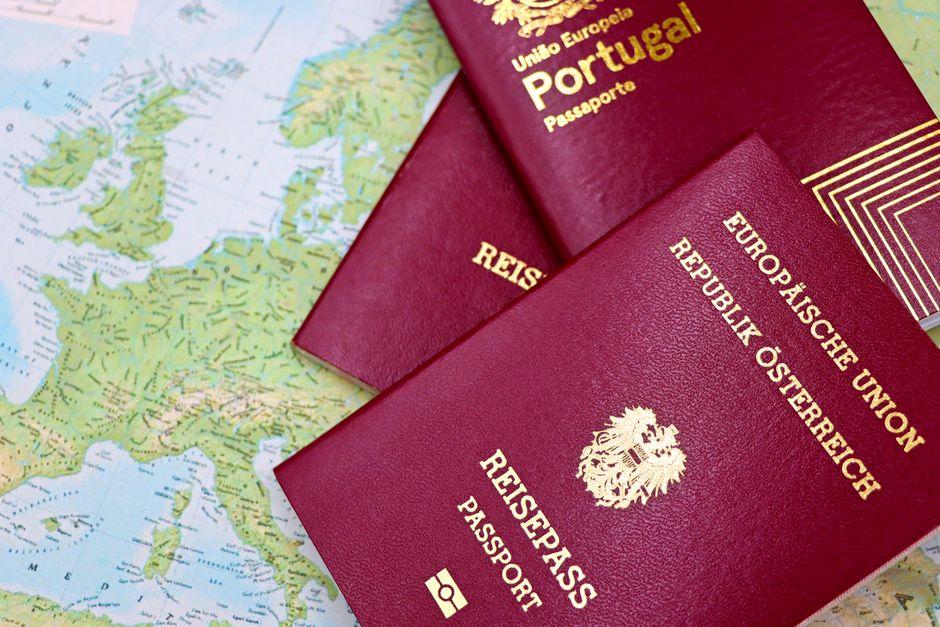
The Complex Reality Behind Foreign Passports and Social Inequality
Foreign passports are often framed as straightforward gateways to global mobility and economic opportunity, but this narrative glosses over the deeply ingrained social inequalities they simultaneously reflect and perpetuate. The acquisition of a second passport typically favors individuals with substantial capital or privileged networks, effectively codifying wealth into legal identity. This exclusivity means that foreign passports are less about universal freedom and more about reinforcing global class stratifications. For example, states offering citizenship-by-investment programs primarily attract affluent applicants, creating a marketplace where nationality is commodified. This trend can inadvertently erode the principle of equal citizenship by validating a tiered system in which certain individuals gain enhanced rights and protections simply through economic leverage.
Critically, the assumption that foreign passports are a panacea for social mobility overlooks nuanced trade-offs. While these documents may unlock visas, tax advantages, or better education and healthcare access, they do not inherently dismantle the systemic barriers faced by marginalized populations within or across countries. In fact, these passports can exacerbate inequalities by siphoning talent and resources away from developing nations-a phenomenon often termed “citizenship leakage.” Policymakers and individuals alike must weigh these factors carefully. Instead of idealizing second passports as universal keys, a more balanced approach would advocate for legal reforms that widen access to citizenship through inclusive, transparent criteria and international cooperation to mitigate inequality created by these privileged pathways.
| Aspect | Common Perception | Complex Reality |
|---|---|---|
| Access | Accessible to any aspiring migrant | Often restricted to the wealthy or well-connected |
| Impact on Inequality | Reduces barriers to opportunity | Reinforces global socioeconomic divides |
| Role in Social Mobility | Universal enabler | Selective advantage, sometimes worsening brain drain |

When Global Mobility Becomes a Privilege Rather Than a Right
Global mobility has historically been framed as a fundamental right-an expression of freedom and opportunity in an increasingly interconnected world. However, this ideal often masks a harsh reality: unrestricted movement is less a universal right and more a selective privilege, increasingly accessible to the affluent and well-connected. The growing disparities in passport strength and visa facilitation crystallize this divide, creating tiers of mobility that reinforce existing socio-economic hierarchies rather than dismantle them. In essence, the passport market commodifies freedom, positioning global citizenship not as an inherent entitlement but as a luxury item subject to economic gatekeeping.
To navigate this landscape intelligently, we must recognize the inherent trade-offs between stringent border controls designed to maintain national security and the rising demand for more equitable access to global opportunities. Rather than blanket liberalization or restrictive nationalism, a nuanced approach involves:
- Reevaluating visa policies with an emphasis on reciprocity and fairness, ensuring smaller or less economically powerful nations are not perpetually locked out.
- Encouraging transparency in citizenship-by-investment programs to prevent exploitation and alienation of local populations.
- Investing in non-passport-based mobility solutions such as digital nomad visas and regional travel agreements that democratize movement without compromising state interests.
Ultimately, the question is not merely who can move but how societies balance security, sovereignty, and fairness-transforming global mobility from an exclusive privilege into a more inclusive framework grounded in shared opportunity and responsibility.
Rethinking Citizenship Strategies in an Interconnected World
In an era where borders dissolve under the weight of globalization, traditional citizenship paradigms require a profound rethink. Rather than clinging to rigid, jurisdiction-bound notions, policymakers must embrace fluid, multi-dimensional frameworks that recognize the overlapping identities and obligations forged by cross-border mobility. Yet, this progressive vision must contend with the inherent tensions between inclusivity and sovereignty. For example, while dual or multiple citizenships can democratize access to global opportunities, they also complicate state obligations such as taxation, military service, and legal accountability. The temptation to view citizenship purely as a transactional commodity-exemplified by “golden passport” schemes-risks reducing governance to mere market logic, undermining the deeper social contract that citizenship represents.
Future citizenship strategies should prioritize transparency and social equity over profit-driven expediency. Instead of blanket concessions, governments might consider tiered citizenship models that differentiate between rights and responsibilities based on genuine, demonstrated ties rather than capital alone. To illustrate:
| Citizenship Tier | Rights Granted | Obligations Required |
|---|---|---|
| Economic Investor | Travel freedoms, business facilitation | Minimum residency, tax transparency |
| Civic Participant | Voting rights, social benefits | Sustained residency, civic duties |
| Cultural Affiliate | Access to cultural/personal rights | Proof of heritage, community engagement |
- Trade-offs between depth of integration and ease of access must be openly acknowledged, rather than obscured behind simplified narratives.
- Strategic leverage can be harnessed by states to ensure that citizenship benefits do not merely serve global elites but also promote equitable development and societal cohesion.
Ultimately, rethinking citizenship in today’s interconnected world means moving beyond transactional privileges and towards a framework that respects both the complexities of individual identity and the imperatives of collective responsibility. Only then can citizenship remain a meaningful, adaptable institution rather than a commodified loophole for the privileged few.
Balancing National Loyalty and Global Access in the Passport Economy
In the evolving passport economy, the binary of national loyalty versus global access is far too simplistic. Passports have traditionally been tokens of sovereign identity, but today they function as strategic assets for individuals navigating a borderless world. This shift challenges the sacrosanct notion that unwavering allegiance to one’s country is the only moral compass. While national loyalty underscores civic responsibility and social cohesion, an insistence on exclusive attachment ignores the complex realities of global mobility, economic opportunity, and diverse personal identities. The true challenge lies in recognizing that global access does not necessarily erode national loyalty but can, in some cases, enhance it by providing individuals with new channels for economic contribution, cross-cultural engagement, and humanitarian support. The passport economy demands a nuanced understanding: loyalty is not static, and access is not boundless.
Policy frameworks must strike a deliberate balance between sovereignty and permeability. Embracing dual citizenship or second passports, often seen as tools for elites, can be reframed as instruments of resilience for a broader demographic when regulated thoughtfully. To avoid exacerbating inequalities, governments should differentiate between:
- Economic citizenship programs that risk commodifying nationality exclusively for wealth accumulation, and
- Mobility-enhancing policies aimed at empowering talent exchange, diaspora engagement, and global entrepreneurship.
In practical terms, a tiered model can safeguard national interests while expanding access:
| Dimension | Strict National Loyalty Model | Balanced Passport Economy |
|---|---|---|
| Citizenship Issuance | Highly restrictive, based on lineage or long-term residency | Integrated with global mobility needs and economic contribution |
| Rights and Obligations | Rigid, emphasizing singular allegiance and exclusive rights | Flexible dual obligations acknowledging transnational realities |
| Access to Services | Limited to national territory | Facilitated access abroad via bilateral agreements |
This calibrated approach requires transparency, robust anti-abuse mechanisms, and an acknowledgment that passports increasingly serve as multifaceted tools-symbols of identity, keys to opportunity, and instruments of geopolitical strategy. Accepting this complexity opens a path beyond nostalgia and elitist critiques toward a passport economy that genuinely balances national loyalty with cosmopolitan access.
Why Holding Multiple Passports Might Not Guarantee Freedom or Security
Possessing multiple passports is often romanticized as the ultimate key to unrestricted global mobility and personal security, but this perception overlooks significant complexities and trade-offs. For one, not all passports carry equal weight in terms of visa-free access or diplomatic protection. Having an additional passport from a country with limited global influence or strained international relations may offer minimal practical benefit-or worse, create new vulnerabilities. Furthermore, dual citizenship can entangle holders in conflicting legal systems, such as mandatory military service, tax obligations, or political loyalties, which can severely curtail the supposed newfound freedom. Simply put, more passports do not necessarily translate into fewer barriers; they can multiply bureaucratic and geopolitical entanglements instead.
| Passport Type | Visa-Free Access (approx.) | Notable Restrictions |
|---|---|---|
| Tier 1 (e.g., USA, Germany) | 180+ countries | USA passports face frequent scrutiny in some regions |
| Tier 2 (e.g., Brazil, Turkey) | 120-140 countries | Subject to geopolitical shifts affecting ease of travel |
| Tier 3 (e.g., Caribbean nations) | 80-100 countries | Limited protection in crises; complex tax regimes |
Beyond mobility, the perceived security of dual or multiple citizenships depends heavily on global political stability and diplomatic relations at any given time. Elites who accumulate passports as insurance against domestic upheaval or economic crises often underestimate how quickly international standing can shift, rendering one’s fallback options uncertain. A nuanced approach recognizes that the value of foreign passports is contingent on context: for instance, holding a second passport might be a prudent hedge for those in volatile regions but less critical-and potentially burdensome-for citizens of stable countries with strong passports. Therefore, rather than seeking quantity, a targeted strategy emphasizing quality, political stability, and legal clarity is essential when evaluating the real freedoms and protections passports can provide.
In Retrospect
In the end, foreign passports sit at the crossroads of possibility and privilege-symbols that can either unlock new horizons for individuals or reinforce the invisible networks of global elites. As the world becomes ever more interconnected, the true challenge lies in balancing accessibility with accountability, ensuring that the key to mobility opens doors for many, not just a select few. Whether we view foreign passports as catalysts for opportunity or instruments of advantage, their impact will continue to shape the contours of global citizenship for years to come.




